



Beyond the 'Goldilocks Zone'
For decades, the concept of the habitable zone—often called the 'Goldilocks zone'—has dominated our search for life. It describes the orbital distance from a star where temperatures are just right for liquid water to exist on a planet's surface. While
this is a crucial starting point, scientists now understand that many other factors are just as important. A planet could be in the perfect location but still be entirely inhospitable. Its size, mass, and geology all play critical roles. A planet that is too small, for instance, may not have enough gravity to hold onto a protective atmosphere, leaving it exposed and barren.
Reading the Atmosphere for Clues
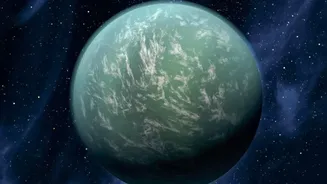
One of the most significant advancements in exoplanet research is the ability to study their atmospheres. Powerful instruments, most notably the James Webb Space Telescope (JWST), can analyze the light that filters through a distant planet's air as it passes in front of its star. This allows scientists to hunt for 'biosignatures'—gases that could indicate the presence of life. On Earth, life produces a specific mix of gases, like oxygen from photosynthesis and methane from microbes. Finding a combination of gases like oxygen and methane together is a compelling sign, as they tend to react with and destroy each other, suggesting something is constantly replenishing them. Recently, observations of the exoplanet K2-18 b found methane and carbon dioxide, and even a tentative hint of dimethyl sulfide (DMS), a gas on Earth produced almost exclusively by marine life. While this isn't definitive proof of life, it demonstrates the incredible power of these new tools to look for chemical fingerprints from light-years away.
The Star You Orbit Matters
Not all stars are created equal when it comes to hosting life. The type of star a planet orbits dramatically influences its potential habitability. Red dwarfs are the most common stars in our galaxy, but they pose challenges. Their habitable zones are much closer to the star, meaning orbiting planets are often tidally locked—with one side in perpetual daylight and the other in endless night. These stars are also known for unleashing powerful stellar flares with intense radiation that could strip away a planet's atmosphere and sterilize its surface. Many astronomers believe that K-type stars, or 'orange dwarfs,' might be the sweet spot for life. They are more stable than red dwarfs but live much longer than larger, sun-like G-type stars, offering billions of extra years for complex life to potentially evolve.
Planetary Protection Systems
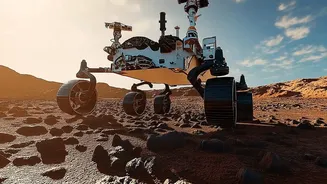
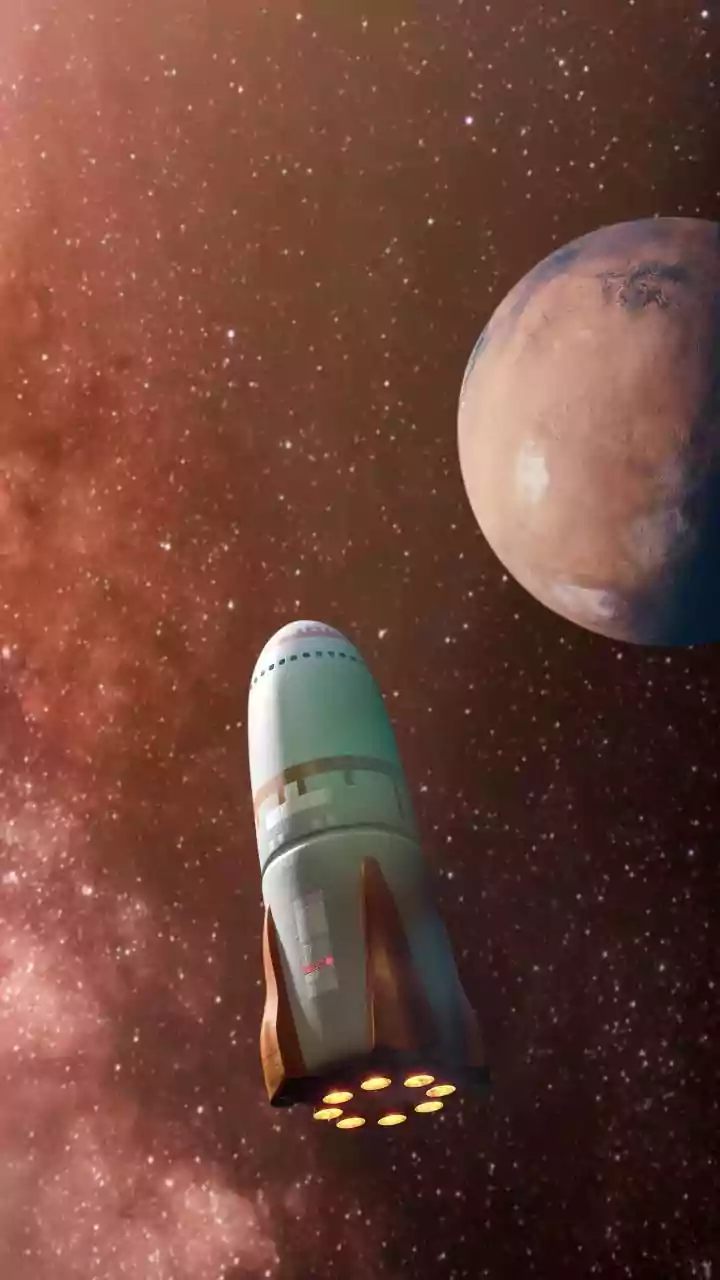
Just like on Earth, a planet needs its own defense systems. A robust magnetic field is considered a critical requirement for habitability. Generated by a planet's molten core, a magnetic field deflects harmful stellar winds and cosmic radiation that would otherwise erode the atmosphere over time. Mars, for example, is thought to have lost its once-thicker atmosphere and surface water after its magnetic field died. A planet's mass and geology are also key. A larger planet is more likely to have a substantial iron core capable of generating a strong magnetic field. The presence of plate tectonics, while harder to detect from afar, is also thought to play a vital role in regulating a planet's climate and cycling nutrients necessary for life.
Searching for Signs of Technology
The search for life isn't limited to biology. A growing number of scientists are also searching for 'technosignatures'—evidence of advanced technology. This broadens the search from microbial life to intelligent civilizations. Technosignatures could include anything from industrial pollutants in an atmosphere, like nitrogen dioxide or chlorofluorocarbons, to the faint light of massive cityscapes on a planet's night side. Other more speculative ideas include searching for massive artificial structures built to harness a star's energy, often called Dyson spheres, or even unusual radio or laser signals being used for communication. While no technosignature has ever been confirmed, the approach acknowledges that intelligent life might reveal itself through its impact on its environment, much as humanity has on Earth.