




The Old Walls Are Coming Down
Think of a scientist. You probably picture someone in a white lab coat, surrounded by complex equipment, working on problems too difficult for the average person to comprehend. For a long time, that image wasn't far from the truth. Scientific knowledge
was often locked away behind expensive journal paywalls, and participation was limited to those with advanced degrees and institutional access. The public’s role was largely to be a passive recipient of discoveries, not an active participant in making them. But this model is becoming outdated. A powerful global movement towards 'Open Science' is changing the very definition of who can contribute to our collective understanding of the world.
Citizen Science: Your Phone is the New Lab
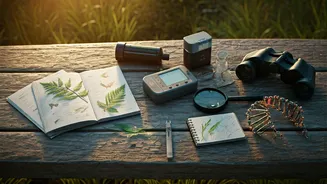
The most visible aspect of this shift is citizen science, where the public collaborates with professional scientists to collect and analyse data. This isn’t just a hobby; it’s a powerful research tool. With a smartphone in nearly every pocket, millions of people can become sensors for the planet. Projects like eBird allow birdwatchers to log sightings, creating a massive, real-time database of bird populations that helps track migration patterns and environmental health. In India, platforms like the India Biodiversity Portal and SeasonWatch engage citizens in documenting local flora and fauna, contributing vital data for conservation efforts that would be impossible for small teams of researchers to gather alone. From classifying galaxies on Zooniverse from your laptop to monitoring local water quality, citizen science transforms curiosity into tangible data.
Unlocking the Knowledge
A discovery is only useful if people can access it. For decades, most scientific papers were published in journals that charged hefty subscription fees, creating a knowledge gap between well-funded universities and everyone else. The Open Access movement is fighting to change this. It advocates for research to be made freely available online for anyone to read. Platforms like arXiv, where physicists and mathematicians have shared pre-publication papers for years, have paved the way. Now, major funders and even governments are pushing for change. India's proposed 'One Nation, One Subscription' policy, for instance, aims to negotiate with journal publishers to make scientific literature accessible to everyone in the country, not just those at elite institutions. This democratisation of knowledge means a student in a small town has the same access to cutting-edge research as a professor at a top-tier university.
Data for the People
Beyond published papers, the raw data from experiments is also becoming more open. Major scientific endeavours, like the Human Genome Project or data from the Hubble Space Telescope, have long made their datasets public. This allows other researchers—and even amateur data enthusiasts—to re-analyse the findings, look for new patterns, and make discoveries that the original team might have missed. This transparency not only accelerates science but also builds public trust. When the data is open for scrutiny, it becomes harder for flawed or fraudulent research to hide. It fosters a culture of collaboration over competition, where data is seen as a shared resource for humanity.
Not a Perfect Road
While the trend is overwhelmingly positive, the road to completely open science has its challenges. In citizen science, ensuring data quality and consistency across thousands of volunteers is a constant effort. The digital divide remains a significant barrier; you can’t participate in online projects if you don’t have reliable internet access. Furthermore, the prestige system in academia still often favours publications in exclusive, high-impact journals, creating a disincentive for some researchers to embrace open-access platforms. Overcoming these hurdles requires not just technological solutions but a continued cultural shift within the scientific community itself, moving away from prestige and towards collaboration and public engagement.