







Why Research in Microgravity?
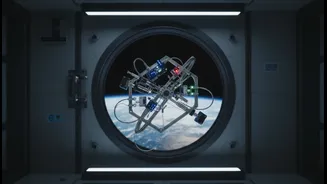
Microgravity is the condition of near-weightlessness experienced in orbit. On Earth, gravity influences everything, from the way fluids mix to how cells grow. By removing gravity from the equation, scientists can observe fundamental physical and biological
processes that are normally masked. This unique environment allows for breakthroughs that are impossible to replicate on our planet, leading to innovations in medicine, manufacturing, and technology that can benefit life on Earth. For ISRO, mastering microgravity research is crucial for the success of long-duration human spaceflights, like the upcoming Gaganyaan mission and the planned Bharatiya Antariksh Station.
The Biological Frontier: Health and Food in Space
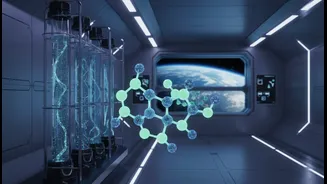
A major focus for ISRO is space biology—understanding how life behaves without gravity. This includes studying the effects of microgravity on the human body, such as muscle atrophy and bone density loss, to develop countermeasures for astronauts. In collaboration with international partners, ISRO has conducted experiments on the International Space Station (ISS) to study muscle regeneration and the resilience of microorganisms like tardigrades. Another critical area is growing food. ISRO is exploring how to cultivate crops in space, investigating the germination of seeds and the growth of edible microalgae and cyanobacteria like Spirulina, which could serve as a sustainable source of nutrition and oxygen for future space crews.
Crafting the Materials of Tomorrow
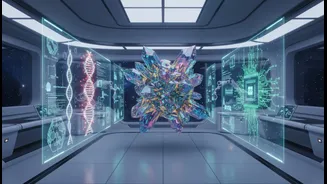
The absence of gravity-driven convection and sedimentation allows for the creation of purer crystals and unique metal alloys. ISRO is actively pursuing research in materials science to develop advanced materials with applications in space and on Earth. This includes creating lighter, stronger alloys for spacecraft construction and high-quality semiconductor crystals for next-generation electronics. Understanding how materials form and behave in microgravity can lead to more efficient manufacturing processes and novel products, from better medicines developed through superior protein crystallization to advanced components for the communications and defence industries.
Physics, Fluids, and Fire Safety
Fundamental physics also behaves differently in space. ISRO's microgravity research extends to fluid physics and combustion. Without buoyancy, flames burn in a spherical shape, and fluids don't separate based on density. Studying these phenomena is not just a scientific curiosity; it has practical implications. Understanding fire behaviour in microgravity is critical for ensuring crew safety on a space station. Likewise, insights into fluid dynamics can help design more efficient fuel systems, cooling technologies, and life support systems for spacecraft.
Building India’s Microgravity Ecosystem
To support this ambitious research, ISRO is developing dedicated platforms. The Space Docking Experiment (SPADEX) is a key mission to master the technologies for docking two spacecraft, which is essential for building a space station that can host long-term experiments. Furthermore, ISRO is actively fostering a national ecosystem for microgravity research through initiatives like the Indian Microgravity Experiments (IMEx-2026). This programme invites scientists and industries from across India to propose and develop experiments, ensuring that the entire nation contributes to and benefits from the next frontier of scientific exploration.