


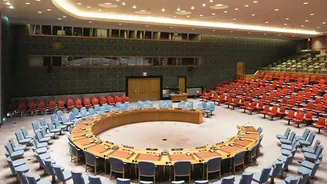

The Official Process on Paper
According to Article 97 of the UN Charter, the process is straightforward: the Security Council recommends a single candidate, and the General Assembly appoints them. In recent years, reforms have introduced more transparency. The process now officially
begins with a joint letter from the presidents of the Security Council and the General Assembly inviting member states to nominate candidates. These candidates submit vision statements and participate in public, town-hall-style dialogues with the General Assembly, allowing all 193 member states to engage with them directly. This formal process culminates in a resolution by the General Assembly to appoint the recommended candidate, which has historically been adopted by consensus. This newer, more open phase was designed to make the selection less of a mystery than it had been for most of the UN's history.
The Security Council’s Decisive Power
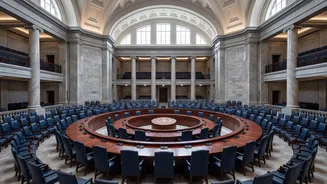
Despite the move towards transparency, the real decision-making power remains concentrated within the 15-member Security Council. For a candidate to be recommended, they must secure at least nine affirmative votes. Crucially, this includes avoiding a veto from any of the council's five permanent members (P5): China, France, Russia, the United Kingdom, and the United States. This veto power means that the P5 effectively holds the keys to the office. A candidate who is unacceptable to even one of these five nations has no path forward, regardless of their support among other countries. This reality ensures that the selection is, at its core, a geopolitical negotiation.
Closed Doors and Straw Polls
The Security Council’s deliberations happen in private meetings. To gauge support for candidates without holding a formal, binding vote, the council uses a system of informal secret ballots known as 'straw polls'. In these polls, members cast a vote to 'encourage', 'discourage', or express 'no opinion' on each candidate. As the process narrows, a colour-coded ballot system is used. The five permanent members vote on red paper, while the ten elected members use white paper. This allows the council to see if a leading candidate faces a potential veto (a 'discourage' vote on a red ballot) before moving to a formal recommendation. Recent polls for the selection of the next Secretary-General have shown top candidates receiving 'discourage' votes from P5 members, highlighting the deep divisions and high stakes involved.
Unwritten Rules of the Game
Beyond the formal charter and informal polls, a set of unwritten conventions heavily influences the selection. One of the most significant is the principle of regional rotation, which suggests that the post should cycle between different geographical areas of the world. While not a formal rule, it creates expectations and shapes the field of candidates. Another strong precedent is that no national from a P5 country is ever chosen for the top job, to maintain a sense of impartiality. Furthermore, while the General Assembly has called for gender equality to be considered, a woman has never been appointed as Secretary-General. These traditions, combined with the hard politics of the P5 veto, create a complex filtering system that produces compromise candidates from middle-power nations who are deemed acceptable to all major powers.