







The Lifeline and the Ledger
The connection between the monsoon and India's economy is direct and profound. Accounting for about 70% of the country's annual rainfall, the monsoon is the backbone of its agricultural sector. A significant portion of India's farmland, nearly half, lacks
access to irrigation and is entirely dependent on these seasonal rains for the crucial kharif sowing season. This period, from June to September, is when staples like rice, pulses, coarse cereals, and oilseeds are planted. A strong, evenly distributed monsoon means a bountiful harvest, healthy rural incomes, and stable food prices. Conversely, a weak or erratic monsoon can disrupt this entire chain, leading to lower yields, pressuring farm incomes, and ultimately, driving up the prices of essential food items for consumers across the country.
This Year's Monsoon Report Card
The forecast for 2026 is worrying. The India Meteorological Department (IMD) has projected a "below-normal" monsoon, with rainfall expected to be around 90-92% of the Long Period Average (LPA). This outlook is compounded by the strengthening of El Niño conditions, a weather pattern historically linked to drier monsoons in India. The concern began with a sluggish start. June 2026 was one of the driest in over a century, with a nationwide rainfall deficit of around 40%. While the monsoon has since advanced across many parts of the country, the initial deficit and the forecast for a below-normal July have raised red flags. The distribution of rain is just as important as the total amount, and forecasts suggest that central, western, and northern India could be particularly affected.
The Grocery List Under Watch
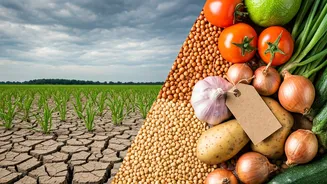
So, which items on your shopping list are most likely to see a price jump? The primary concern is for rain-fed kharif crops. Pulses, such as tur (pigeon pea) and other dals, are particularly vulnerable. India is a net importer of pulses, and any domestic production shortfall can quickly lead to price volatility. Edible oils are another category to watch, as oilseed crops like soybeans and groundnuts depend heavily on monsoon rains. Vegetables, especially staples like tomatoes and onions, are also highly sensitive to weather disruptions. Recent weeks have already seen a spike in tomato prices due to a combination of heatwaves and delayed rains disrupting supply chains. While the government has large buffer stocks of rice and wheat which should cushion any supply shocks for these cereals, the prices for many other daily essentials remain exposed to the monsoon's performance.
From Puddle to Plate: The Price Journey
The journey from a field with deficient rain to a higher bill at the checkout counter involves several steps. Lower rainfall first impacts sowing; farmers may delay planting or switch to less water-intensive crops, affecting the total output. Poor yields mean lower supply available at the wholesale markets, or mandis. This scarcity drives up the base price. Then, secondary costs can add to the pressure. For example, if production is low in one region, produce must be transported from farther away, increasing logistics costs. All these factors culminate in higher retail prices. This isn't just theory; during past El Niño years, food inflation has seen notable spikes, directly impacting the common person's budget.
The Bigger Economic Picture
The impact of a weak monsoon extends beyond the kitchen. Rising food prices are a primary driver of headline inflation in India, given that food items constitute a large part of the consumer price index. This puts pressure on the Reserve Bank of India (RBI), potentially limiting its ability to manage interest rates to support economic growth. A struggling agricultural sector also dampens rural demand, as lower farm incomes mean less spending on goods and services, affecting industries from fast-moving consumer goods to automobiles. While mitigating factors like comfortable reservoir levels and robust buffer stocks for certain grains exist, the performance of the monsoon in the critical month of July will be a key determinant for India's economic outlook in the months ahead.