
Pattachitra: The Stories on Cloth
In the heritage village of Raghurajpur, just a short drive from Puri, nearly every home is an artist's studio. This is the heartland of Pattachitra, a tradition of scroll painting on cloth that dates back centuries. The name itself comes from the Sanskrit
words 'patta' (cloth) and 'chitra' (picture). Artisans, known as Chitrakars, prepare a canvas by coating layers of cotton with a paste of tamarind seeds and chalk. Upon this surface, they paint intricate narratives from Hindu mythology, especially stories of Lord Jagannath, using natural pigments. A visit to Raghurajpur offers a unique chance to see murals adorning the village walls and watch artists at work, creating these detailed masterpieces that were once integral to temple rituals.
Pipili Appliqué: A Riot of Colour
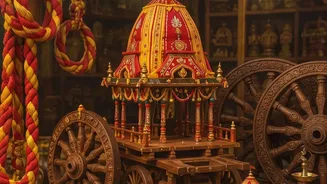
The town of Pipili, located between Bhubaneswar and Puri, is famous for its vibrant appliqué work, locally known as 'Chandua'. This craft involves stitching pieces of coloured cloth onto a base fabric to create bold, graphic designs. Historically, this art form is deeply connected to the Jagannath Temple, with artisans creating canopies, umbrellas, and banners for the annual Rath Yatra (Chariot Festival). The chariots of the three deities are decorated with massive cloth coverings in specific colour schemes: red and yellow for Lord Jagannath, red and green for Lord Balabhadra, and red and black for Devi Subhadra. Today, Pipili's main streets are a dazzling display of this craft, with everything from elaborate garden umbrellas to small decorative hangings available.
Tarakasi: Silver Filigree of Cuttack
Cuttack, the 'Silver City of India', is the epicentre of Tarakasi, a highly skilled form of silver filigree work that is over 500 years old. The term means 'wire work' (tara and kasi), and the process is as delicate as it sounds. Artisans draw silver into fine threads and twist them into intricate, lace-like patterns. These designs are then used to create exquisite jewellery, decorative items, and even the massive, shimmering backdrops known as 'Chandi Medha' for Durga Puja pandals. Tarakasi work is a testament to incredible patience and precision, transforming rigid metal into flowing forms inspired by nature and temple motifs.
Dhokra Casting: The Lost-Wax Legacy
Dhokra is an ancient metal-casting technique using the 'lost-wax' method, a craft that is over 4,000 years old. Practised by tribal communities in districts like Dhenkanal and Mayurbhanj, this folk art produces objects with a distinctively rustic and antique feel. The process begins with a core model made from beeswax, which is then covered in clay. When heated, the wax melts and drains out, leaving a mould into which molten brass or bronze is poured. Once the metal cools, the clay mould is broken, revealing a one-of-a-kind metal object. Dhokra artisans create a wide range of items, from figurines of deities and animals inspired by folk culture to utilitarian objects like bowls and lamps.
Sambalpuri Ikat: Poetry in Thread
The handloom tradition of western Odisha gives the world the stunning Sambalpuri Ikat, locally known as 'Bandha Kala' or the 'art of tying'. Unlike printed fabrics, the magic of Ikat happens before the weaving begins. Yarns are meticulously tie-dyed in specific patterns, a process that requires immense mathematical precision. When these pre-dyed threads are woven on the loom, the colours align to reveal intricate motifs like flowers, animals, and geometric shapes. This technique means the pattern appears identically on both sides of the fabric. The tradition, brought to the region by the Bhulia community centuries ago, is renowned for its 'blurry' edges, a hallmark of authentic handwoven Ikat.