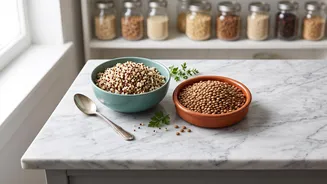







In the world of healthy eating, quinoa and lentils are pantry superstars. Both are praised for their nutritional benefits, but they are not the same. When it comes to dietary fibre, one of these plant-powerhouses has a clear advantage.
The Main Event: The Fibre Showdown
When comparing these
two foods, the difference in dietary fibre is significant. Lentils are the undisputed champion in this category. A single cooked cup of lentils packs a massive 15 to 16 grams of dietary fibre. In contrast, the same amount of cooked quinoa provides about 5 grams of fibre. This means lentils offer roughly three times the fibre content of quinoa, making them a superior choice if boosting your fibre intake is a primary goal. For context, a cup of lentils can provide over half of the daily recommended fibre for women and a significant portion for men.
Soluble vs. Insoluble: A Deeper Dive
Not all fibre is created equal. It comes in two main types: soluble and insoluble, and both are important for health. Lentils are a rich source of both. Soluble fibre dissolves in water to form a gel-like substance, which can help lower cholesterol and stabilize blood sugar levels. Insoluble fibre adds bulk to stool and helps food pass more quickly through the digestive system, promoting regularity. While quinoa also contains both types, the majority of its fibre is insoluble. Lentils' potent mix of both soluble and insoluble fibre gives them a slight edge for comprehensive digestive and heart health benefits.
Beyond Fibre: The Protein Profile
While lentils win on fibre, the protein story is more nuanced. A cup of cooked lentils provides an impressive 18 grams of protein. Quinoa contains about 8 grams per cooked cup. However, quinoa has a special distinction: it is a 'complete protein'. This means it contains all nine essential amino acids that our bodies cannot produce on their own. Most plant-based proteins, including lentils, are 'incomplete', lacking sufficient amounts of one or more of these essential amino acids. However, this is easily solved by pairing lentils with a whole grain like brown rice over the course of a day to get a complete amino acid profile.
Micronutrients, Calories and Carbs
Both foods are nutritional powerhouses but shine in different areas. Lentils are exceptionally rich in folate and iron, making them an excellent choice for heart health and preventing fatigue. One cup of cooked lentils provides a substantial amount of your daily folate needs. Quinoa, on the other hand, is a better source of minerals like magnesium, manganese, and phosphorus. Calorie and carbohydrate counts are quite similar. A cooked cup of either contains around 220-230 calories and about 40 grams of carbohydrates. Both have a relatively low glycemic index, meaning they are unlikely to cause sharp spikes in blood sugar.
In the Kitchen: Cooking and Versatility
Both quinoa and lentils are simple to prepare. Quinoa cooks in about 15 minutes, similar to rice. It's important to rinse quinoa before cooking to remove its natural coating, called saponins, which can impart a bitter taste. Lentils, depending on the variety, can take anywhere from 15 to 30 minutes to cook and do not require pre-soaking. Quinoa has a mild, nutty flavour and a fluffy texture, making it a great substitute for rice, a base for salads, or an addition to soups. Lentils have a richer, earthier flavour and are a staple in soups, stews, curries, and as a hearty base for veggie burgers and meatless sauces.