




A Changing of the Guard
Meta's head of infrastructure and co-head of engineering, Santosh Janardhan, is stepping down after more than 15 years with the company. He will be replaced by David Brown, a former senior vice president at Amazon Web Services (AWS) who joined Meta in July
2026. The transition is planned to be gradual, with Janardhan remaining through the first quarter of 2027 to support the handover. In an internal memo, Janardhan stated it was 'time to pass the baton', but no official reason was given for his departure.
The Legacy of Santosh Janardhan
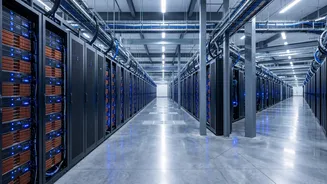
Joining Facebook back in 2009, Janardhan has been a central figure in building the colossal technical foundation that supports Meta's family of apps. His tenure saw the scaling of data centers, networks, and custom silicon programs that serve billions of users daily. More recently, he was a key leader in the Meta Compute initiative, the group tasked with overseeing the company's massive buildout of AI infrastructure to compete in the generative AI race. His departure marks the end of an era for one of the key architects of Meta's global technical footprint.
Meet David Brown, the New Chief
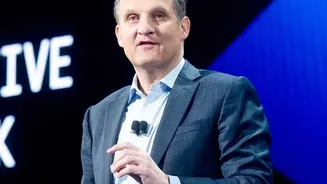
David Brown is a significant hire from a direct competitor. Before joining Meta, he spent nearly two decades at Amazon, where he was a senior vice president at AWS overseeing compute and machine-learning services. His experience at the heart of the world's largest cloud provider, particularly with the large-scale systems that power AI and cloud workloads, is directly relevant to Meta's current challenges. Brown's appointment signals a strategic move to bring in leadership with deep expertise in building and operating dependable, massive-scale infrastructure specifically for demanding AI applications. In addition to leading the infrastructure organization, Brown will also serve as the chief technical officer for the Meta Compute initiative.
Why AI Infrastructure Is Everything
AI infrastructure is the engine room for Meta's future. It encompasses the vast data centers, specialized computer chips, and complex software systems required to train and run advanced AI models like Llama 3. This includes everything from the physical buildings to the custom 'MTIA' chips Meta is developing to handle its unique AI workloads more efficiently. As AI models become more sophisticated, their demand for raw computing power explodes. Without a best-in-class, hyper-scalable infrastructure, Meta cannot hope to compete with rivals like Google, Microsoft, and Brown's former employer, Amazon, in creating next-generation AI experiences and personal assistants.
A Pivot Under Pressure
This leadership transition comes as Meta is pouring immense resources into AI, a strategy that has drawn scrutiny from investors. The company projected capital expenditures for 2026 to be between $135 billion and $145 billion, a figure largely driven by the AI infrastructure buildout. This level of spending has impacted the company's financials, even leading to negative free cash flow in the third quarter. Appointing a leader like Brown, with a career focused on operating massive, efficient cloud systems, may be a move to ensure this enormous investment is executed effectively and delivers returns as Meta pushes towards its goal of 'personal superintelligence'.