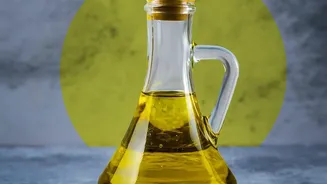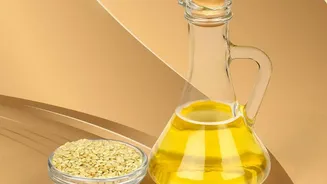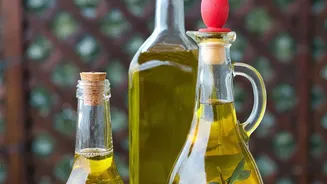






The Old Trick: Confusion by Design
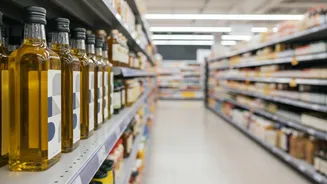
For years, shoppers have faced a subtle challenge: comparing edible oil prices. Was a 910 ml pouch for ₹180 a better deal than a 1-litre bottle for ₹195? This confusion wasn't accidental. Manufacturers often used non-standard pack sizes—like 850 ml, 910g,
or 950 ml—as a competitive tool. A slightly smaller pack with a slightly lower price could seem cheaper at a glance, while actually costing more per millilitre. This tactic, known as shrinkflation or the use of non-standard packs, created an uneven playing field and made it nearly impossible for a regular shopper to quickly determine the true value without doing complicated mental maths. Industry bodies themselves noted that this practice distorted the market and led to widespread consumer confusion.
A New Rule for Clarity
Recognising this issue, the Department of Consumer Affairs has stepped in. In early June 2026, the Indian government mandated that major edible oils must now be sold in standard pack sizes. This rule applies to both domestically produced and imported oils, including common varieties like sunflower, soybean, mustard, and palm oil. Manufacturers, packers, and importers have been given a three-month transition period, meaning that by September 2026, the confusing array of odd sizes should disappear from shelves. The move was widely welcomed by consumer groups and even industry associations, who agreed it would restore transparency.
The Standard Sizes to Look For
The new regulations are simple and specific. Edible oils can now only be sold in nine standard sizes. For most household consumers, the key sizes will be 200 ml, 500 ml, 1 litre, 2 litres, and 5 litres. The rules also include larger wholesale sizes like 10, 15, and 20 litres. To ensure that affordable options remain available for all, packages smaller than 200 ml are exempt from these rules, so small, low-cost sachets will still be available. This standardisation means you can finally compare apples to apples—or rather, one litre of oil to another litre of oil.
How to Spot the Best Deal Now
This new rule empowers you, the consumer, to make smarter choices effortlessly. When two brands are both sold in a 1-litre bottle, you can directly compare their prices. The one with the lower price tag is genuinely the more economical choice, assuming the quality is comparable. There is no more need to wonder if a 9% smaller bottle is more or less than 9% cheaper. To further aid comparison, the rules also state that if the quantity is declared by volume (e.g., in millilitres), the package must also show its equivalent weight (in grams). This brings a new level of clarity to your shopping.
Mastering the Art of Unit Pricing
While the new rules make direct comparison easier, understanding the concept of 'unit price' remains a powerful skill for any savvy shopper. The unit price tells you the cost per a standard amount, like per litre or per 100 grams. Even if you encounter older, non-standard stock, you can calculate the unit price yourself. Simply divide the total price by the net quantity. For example, for a 910 ml pouch costing ₹180, the unit price is ₹180 ÷ 910 ml = ₹0.197 per ml. For a 1-litre (1000 ml) bottle costing ₹195, the unit price is ₹195 ÷ 1000 ml = ₹0.195 per ml. In this case, the larger bottle is the slightly better deal. With standardized packs, this calculation becomes less necessary for oils but is a great habit for all your grocery shopping.