






What to Look for in the October Sky
October 2026 offers a celestial buffet for observers in India. The month kicks off with a major planetary event: Saturn reaches its closest point to Earth on October 4. On this night, the ringed planet will be visible all night long, shining brightly
as a steady, yellowish point of light. While you can see it with your naked eye, a simple pair of binoculars or a small telescope will reveal its famous rings. Two meteor showers are also active this month. First are the Draconids, which peak on the evening of October 8-9. This is a minor shower, but viewing conditions are ideal this year because the peak coincides with a nearly moonless sky, making even faint meteors visible. For the best show, look up right after nightfall. Later, the more active Orionid meteor shower, born from the debris of Halley's Comet, peaks on the nights of October 21-22. Expect to see around 15-20 meteors per hour in a dark location. A bright moon will interfere in the evening, so the best time to watch is in the dark hours before dawn, after the moon has set.
Galaxies, Planets, and Constellations
Beyond specific events, October is a fantastic month for deep-sky viewing, especially around the New Moon on October 10 when the sky is darkest. This is your best chance to spot the Andromeda Galaxy, our closest major galactic neighbor. To find it, look for the Great Square of Pegasus high in the sky; from there, you can star-hop to a faint, fuzzy patch of light. From a truly dark site, it’s visible to the naked eye—a humbling sight considering its light has travelled for 2.5 million years to reach you. While Saturn rules the evening, the pre-dawn sky has its own heroes. Look towards the east before sunrise to spot the brilliant beacon of Jupiter and the distinct reddish hue of Mars. As for star patterns, you can catch the last glimpse of the summer Milky Way’s bright core sinking in the southwest right after sunset in early October. And as the night deepens, look to the east for the return of Orion the Hunter, a sign that the glorious winter constellations are on their way.
Finding Your Celestial Theatre
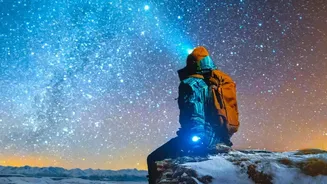
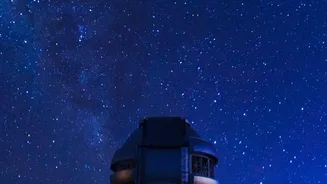
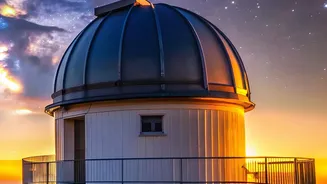
The single most important factor for good stargazing is a dark sky, far from city lights. For the ultimate experience, India has officially designated dark sky reserves. Hanle in Ladakh is considered the best stargazing site in the country, hosting the Indian Astronomical Observatory at an altitude of 4,500 meters. Another world-class high-altitude option is the Spiti Valley in Himachal Pradesh, where the clear, dry air offers breathtaking views. October is a great time for Spiti, as the roads are generally still accessible after the monsoon. If a Himalayan expedition isn't feasible, don't worry. Excellent skies can be found across the country. The Rann of Kutch in Gujarat, the deserts around Jaisalmer in Rajasthan, and hill stations in the Western Ghats like Coorg in Karnataka and Kodaikanal in Tamil Nadu all offer fantastic stargazing opportunities. Even getting 100 kilometres away from a major city can reveal thousands more stars than you'd ever see from home. The key is to find a spot with an open view and minimal artificial light on the horizon.
Your Simple Stargazing Toolkit
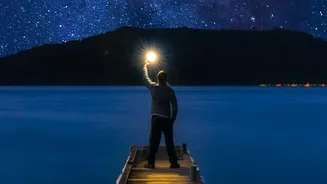
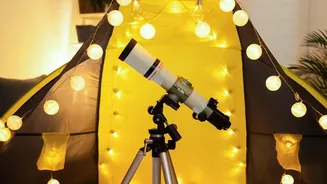
You don't need expensive equipment to start. The best stargazing tool is your own eyes. However, a few simple items can dramatically enhance the experience. Start with a stargazing app on your phone, like Stellarium or SkyView. These apps use your location to create a real-time map of the sky, helping you identify planets, stars, and constellations just by pointing your phone upwards. Next, bring a pair of binoculars. Even a standard 7x50 or 10x50 pair will reveal craters on the moon, the moons of Jupiter, and the true extent of star clusters like the Pleiades. For comfort, pack a reclining chair or a blanket so you can lie on the ground and look up without straining your neck. It gets cold at night, even in warmer regions, so bring layers of clothing. Finally, a red-light torch is essential. A regular white flashlight will ruin your night vision, which takes about 20-30 minutes to fully adapt to the darkness. You can easily make one by taping red cellophane over a regular torch.