



The Planet's Secret Carbon Banks
Beneath the waves and along the water’s edge lie some of the planet’s most effective carbon-trapping ecosystems. Known as 'blue carbon' ecosystems, these coastal habitats—primarily mangrove forests, seagrass meadows, and salt marshes—are powerhouses of carbon sequestration.
While terrestrial forests are famous for absorbing carbon dioxide, these coastal wetlands are often far more efficient. Studies show they can sequester carbon at a rate up to ten times greater than mature tropical forests. The secret lies not just in the plants themselves, but in the soil below. The waterlogged, low-oxygen conditions of coastal sediments prevent organic matter from decomposing quickly. This allows carbon, captured from the atmosphere through photosynthesis, to be locked away for centuries, or even millennia.
When the Protective Barrier Breaks
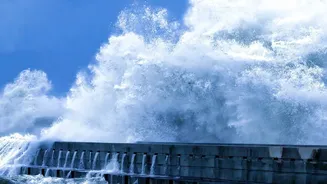
These vital carbon sinks are unfortunately on the front line of climate change and human development. Rising sea levels, more intense storms, coastal development, and pollution are causing these habitats to degrade at an alarming rate. When a mangrove forest is cleared or a salt marsh erodes, a double-blow is dealt to the climate. First, the ecosystem's ability to absorb future carbon dioxide is lost. Second, and more critically, the immense reserves of ancient carbon stored in the soil are disturbed. Exposed to oxygen, this long-stored carbon begins to break down and is released back into the atmosphere and ocean as greenhouse gases. In this way, the destruction of a coastal ecosystem can transform a powerful carbon sink into a significant carbon source, sometimes releasing centuries of stored carbon in just a few decades.
A Dangerous Climate Feedback Loop
This process creates a dangerous feedback loop. Global warming drives sea-level rise and increases storm intensity, which in turn accelerates coastal erosion. This erosion then releases more stored carbon into the system, further contributing to the warming that caused the erosion in the first place. A recent study supported by NASA highlighted the scale of the issue, estimating that along the U.S. East and Gulf coasts alone, marsh erosion results in a net loss of around 380,000 metric tons of carbon every year. Much of this carbon enters the ocean, contributing to acidification, which poses another threat to marine life.
India's Vulnerable Blue Carbon Coastline
For India, with its extensive 7,500-kilometre coastline, this issue is particularly resonant. The country is home to significant blue carbon ecosystems, from the vast Sundarbans mangrove forest in West Bengal to the seagrass meadows off the coasts of Tamil Nadu and Gujarat. These areas are not just biodiversity hotspots but crucial carbon reservoirs. However, they face immense pressure from urban expansion, industrial activity, and the escalating impacts of climate change. Cities like Mumbai have already lost a significant percentage of their protective mangrove cover over the past few decades, increasing their vulnerability to flooding and storm surges. Protecting and restoring these habitats is not just an environmental issue but a matter of climate resilience and economic security for millions living in coastal communities.
More Than Just Carbon
The value of these coastal ecosystems extends far beyond their carbon-storing capacity. Mangroves act as natural barriers, dissipating the energy of storm surges and protecting coastal communities from flooding and erosion. Seagrass beds and marshes serve as critical nursery habitats for commercially important fish species, supporting local livelihoods and food security. They also filter pollutants from the water, helping to maintain water quality. The loss of these habitats therefore has profound consequences that ripple through the environment and the economy, affecting biodiversity, public safety, and the sustainability of coastal industries.