

What is the Crew Escape System?
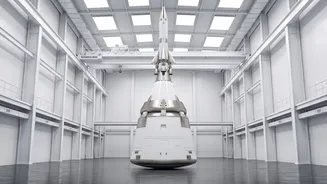
Think of the Crew Escape System (CES) as a sophisticated, high-powered ejection seat, not for a single pilot, but for the entire capsule carrying the astronauts. Its sole purpose is to ensure the survival of the crew in the event of a catastrophic failure
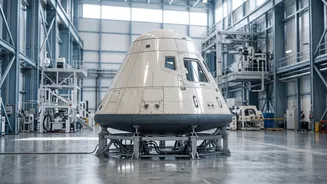
with the launch vehicle, either on the launchpad or during the intense ascent phase through the atmosphere. The system is designed to rapidly pull the Crew Module—the habitable part of the spacecraft—away from a malfunctioning rocket within seconds. It uses a set of powerful, quick-acting solid-fuel motors that can generate immense thrust, accelerating the module away from danger faster than the rocket itself.
A Flawless In-Flight Demonstration
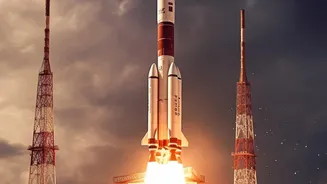
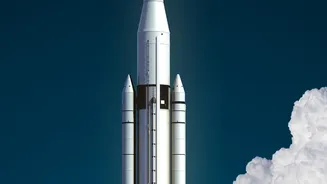
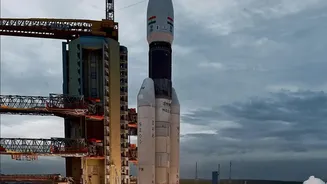
The latest validation was a part of the Test Vehicle Abort Mission (TV-D1), which simulated an in-flight emergency. During this test, a specially designed, single-stage liquid-fueled rocket lifted off with the unpressurised Crew Module and the escape system. At a predetermined altitude of about 17 km and a speed just over the speed of sound (Mach 1.2), a deliberate abort command was triggered. The Crew Escape System's motors fired flawlessly, pulling the module away from the test vehicle. After reaching its peak altitude, the escape system jettisoned, and the Crew Module began its descent, eventually deploying parachutes for a safe splashdown in the Bay of Bengal.
Why This Test is a Game-Changer
In any human space mission, astronaut safety is the absolute highest priority, considered even more important than the success of the mission itself. A reliable abort system is non-negotiable. Without a proven method to save the crew from a launch failure, no space agency will proceed with a human flight. The success of tests like the TV-D1 and the earlier Pad Abort Test in 2018 demonstrates that ISRO is mastering one of the most complex and critical safety technologies in rocketry. It proves the system's ability to function under extreme aerodynamic stress, building the confidence needed to eventually place Indian astronauts, or 'Gaganyatris', atop the powerful LVM3 rocket.
The Road Ahead for Gaganyaan
This successful test is a major milestone, but the journey to India's first human spaceflight is methodical and requires further validation. ISRO has planned more abort tests to verify the system's performance under different emergency scenarios and at various altitudes. Following the full qualification of the escape system, the Gaganyaan programme will proceed with at least two uncrewed orbital missions. These flights, designated G1 and G2, will test the entire mission profile from launch to orbit, re-entry, and recovery. The first uncrewed mission is tentatively scheduled for 2026. Only after these uncrewed flights are successfully completed will India proceed with its historic first crewed mission, which is currently anticipated for 2027 or 2028.