
The Autumn Advantage: Cooler, Clearer Skies
Summer's hazy, humid nights often frustrate stargazers. As autumn arrives, the cooler, drier air becomes more stable. This atmospheric stability, known as good 'seeing' among astronomers, means less turbulence to distort the light from distant planets
and stars. The result is a sharper, steadier view. With the sun setting earlier each day, you also get a generous head start on your nighttime viewing, providing more hours to explore the cosmos before bedtime. These conditions make autumn a prime season for all kinds of celestial observation, from hunting for galaxies to planet-watching.
Jupiter's Autumn Spectacle
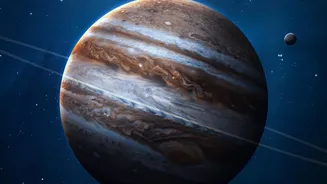
While Jupiter reached its peak brightness for the year during its opposition in January 2026, it remains a brilliant, unmissable beacon in the night sky. Autumn 2026 offers its own unique viewing opportunities. In fact, a series of special events known as lunar occultations, where the Moon passes in front of Jupiter, are happening this season. A particularly good one is visible for observers in eastern North America on the morning of October 6th. Furthermore, the orbital plane of Jupiter's moons is tilted perfectly edge-on to us in October 2026, meaning you might witness the rare sight of the moons passing in front of one another. So while Jupiter isn't at its absolute brightest, it's putting on a special show for those who know when to look.
Gearing Up: Your Ticket to the Moons
You don't need a powerful or expensive telescope for this adventure. The four largest moons of Jupiter, known as the Galilean moons, are visible with a standard pair of binoculars. Models like 7x50 or 10x50 are perfect for the task; the first number is the magnification, and the second is the diameter of the lenses in millimeters. The real secret to success, however, is stability. Jupiter's glare can easily overwhelm the tiny pinpricks of light that are its moons. Mounting your binoculars on a simple tripod will eliminate the natural shaking of your hands, making the moons pop into view. If you don't have a tripod, try bracing your elbows on a fence, a car roof, or another solid surface to steady your view.
How to Find Jupiter and Its Companions
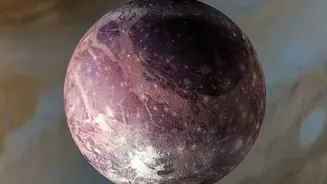
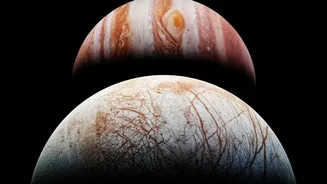
First, find a viewing spot away from the glare of city lights. Even a local park can be a significant improvement over your backyard. Give your eyes about 15 minutes to fully adapt to the darkness. Jupiter is one of the brightest objects in the night sky, so it's easy to spot. Unlike stars, which twinkle, Jupiter shines with a steady, powerful, yellowish-white light. Once you have it in your sights, bring your stabilized binoculars up to your eyes and focus. Look closely on either side of the bright planet. You should be able to spot two, three, or even four tiny 'stars' arranged in a nearly straight line with the planet. Those aren't stars—they are the moons Io, Europa, Ganymede, and Callisto.
Managing Expectations and What You'll See
Through binoculars, the moons will appear as tiny, distinct points of light. Don't expect to see surface details or colors; the magic is in seeing them at all. If you don't see all four moons, don't be discouraged. One or more could be hidden behind Jupiter or passing in front of it, lost in the planet's brilliant glow. The real joy comes from repeat viewings. Observe Jupiter for a few hours or on consecutive nights, and you can watch the moons change their positions as they race around the giant planet. Sketching their positions each night is a classic amateur astronomy project and a wonderful way to connect with the clockwork of our solar system, just as Galileo did over 400 years ago.