


The Public Race: A New Era of Transparency?
On paper, the process for choosing the next Secretary-General is more open than ever before. Following reforms in 2015, the selection is no longer a completely secretive affair. The process now formally begins with a joint letter from the presidents of
the General Assembly and the Security Council calling for candidates. These candidates, nominated by member states, submit vision statements and participate in public dialogues, which are webcast for the world to see. This allows the UN's entire membership of 193 countries, and even the general public, to hear the candidates' priorities and question their platforms. As of late 2026, several candidates have been nominated and have gone through these public hearings.
The Real Decision: The Security Council's Power
Despite the newfound transparency, the core of the decision remains where it always has: behind the closed doors of the 15-member Security Council. The UN Charter's Article 97 states that the General Assembly appoints the Secretary-General 'upon the recommendation of the Security Council'. This single phrase gives the council, and particularly its five permanent members (P5) — China, France, Russia, the United Kingdom, and the United States — decisive power. To secure the nomination, a candidate needs at least nine votes in the Council and, crucially, must not be vetoed by any of the P5. This veto power means that a candidate must be acceptable to all the major world powers, a difficult tightrope to walk.
Secret Straw Polls and Coloured Ballots
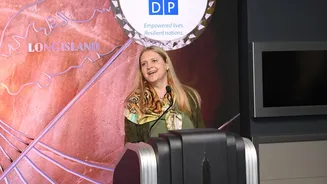
To narrow the field, the Security Council holds a series of informal, secret ballots known as 'straw polls'. In these polls, members vote to 'encourage', 'discourage', or express 'no opinion' on each candidate. The results, while not formally published, quickly leak and signal which candidates have momentum and which are facing opposition. Later rounds often use colour-coded ballots to distinguish the votes of the P5 from the ten elected members. A 'discourage' vote on a coloured ballot is effectively a veto, a clear sign that a powerful nation will block the candidacy. Recent polls have shown Costa Rica’s Rebeca Grynspan leading, but also facing 'discourage' votes from permanent members, highlighting the political hurdles that remain.
Unwritten Rules: Geography and Gender
Beyond the formal rules, the selection is guided by powerful informal conventions. One is the principle of regional rotation, an unwritten rule that the job should rotate between different parts of the world. While not always strictly followed, there is a strong sense among many member states that it is the turn for a candidate from Latin America and the Caribbean. Indeed, many of the current candidates hail from this region. There is also significant global pressure for the UN to finally appoint its first-ever female Secretary-General, after nine men have held the post over eight decades. Several of the prominent candidates are women, making this a central issue in the 2026 selection.
Why the World's Top Diplomat Matters
The person who navigates this complex process will take office on January 1, 2027, and will face a world beset by immense challenges, from geopolitical tensions and ongoing wars to climate change and financial crises. The Secretary-General is not just a figurehead; they are the chief administrative officer of the UN, a vital global mediator, and a moral voice for humanity. For a country like India, the Secretary-General's priorities on issues like UN Security Council reform, sustainable development, and global peace operations are incredibly important. The selection is a geopolitical litmus test, revealing the current state of global cooperation and power dynamics. The ultimate choice will significantly shape the UN's ability to tackle the world's most pressing problems for the next five to ten years.