
Nature’s Perfect Drink for Plants
You may have noticed that your plants look greener and more vibrant after a good rain shower than they do after being watered with a hose. This isn't your imagination. Rainwater is naturally soft, slightly acidic, and free from the chlorine and fluoride
often found in tap water. These additives, necessary for human health, can be harsh on plants, sometimes causing burnt leaf tips or preventing the absorption of essential nutrients. Rainwater, on the other hand, helps unlock micronutrients like iron and zinc in the soil, making them more available to your plants’ roots. It also contains nitrates, a form of nitrogen that plants can readily use, which contributes to lush, green foliage. By using what the sky provides, you are giving your garden water that is chemically superior for its growth.
Simple Ways to Start Harvesting
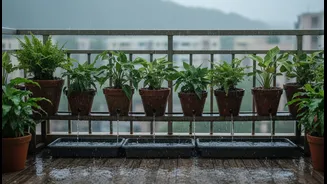
Rainwater harvesting doesn't have to be complicated or expensive. For many homes in India, the easiest method is rooftop collection. You can start with something as basic as placing a large drum or a series of buckets under your roof's downspout. For a more integrated system, gutters can be installed to channel water directly into a larger storage tank. These tanks can range from simple plastic barrels to larger underground sumps, a modern take on the traditional 'kund' used for centuries in regions like Rajasthan. The key is to ensure your collection container is covered with a screen or mesh to keep out leaves, debris, and, most importantly, mosquitoes.
The Golden Rule: Avoid Overwatering
The main concern with abundant water is the risk of drowning your plants. Overwatering is one of the most common gardening mistakes. When soil is constantly saturated, it cuts off the oxygen supply to the roots, leading to root rot, fungal diseases, and a plant that, ironically, looks wilted. Signs of an overwatered plant include yellowing leaves (especially new ones), soft or mushy stems, and stunted growth. A wilting plant isn't always a thirsty plant; if the soil is wet and the plant is drooping, it's a clear sign of too much water. The solution is simple: water only when the plant needs it. Before you use your stored rainwater, check the soil. Push your finger about an inch deep; if the soil feels moist, hold off on watering. A dry surface can be misleading, as the soil below may still be wet.
Smart Watering Techniques
How you water is just as important as when you water. Always aim to water the base of the plant, delivering moisture directly to the root zone where it's needed most. This practice helps keep the foliage dry, reducing the risk of fungal diseases. Watering in the early morning is ideal, as it gives the plant time to absorb the moisture before the afternoon heat causes evaporation. Using a watering can with a rose attachment or a soaker hose allows for a gentle, controlled flow, preventing soil erosion and giving the water time to soak in deeply. This encourages roots to grow deeper, making the plant more resilient during dry spells. Avoid a rigid schedule; instead, let the needs of your plants and the condition of the soil be your guide.
Storing Your Liquid Gold
A good storage system ensures your harvested rainwater remains a valuable asset. Always keep your barrels or tanks securely covered to prevent evaporation and deny mosquitoes a breeding ground. To improve water quality, consider a 'first-flush' diverter. This simple device redirects the first few litres of rainfall, which typically wash dust and contaminants off your roof, away from your main storage tank. In a country with distinct wet and dry seasons, storing rainwater allows you to bridge the gap, providing your garden with high-quality water long after the monsoon has passed. This reduces your dependence on municipal supplies, which is especially crucial during periods of water scarcity or restrictions.