
The Great Starch-to-Sugar Conversion
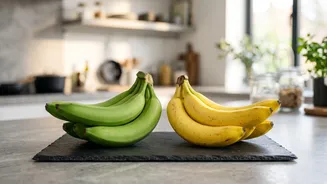
The primary reason a banana’s taste profile changes so dramatically is the conversion of starch to sugar. An unripe, green banana is composed of 70-80% starch, which our tongues don't register as sweet. As the banana ripens, a natural plant hormone called
ethylene gas triggers enzymes, like amylase, to break down these complex starches. These long starch chains are converted into simple sugars—primarily sucrose, glucose, and fructose—flooding the fruit with the sweetness we associate with a ripe banana. A fully ripe, yellow banana with brown spots can see its starch content drop to less than 1%, while its sugar content can increase to over 16%. This is why a green banana feels more like a potato in texture and taste, while a ripe one is a soft, sweet snack.
From Firm and Waxy to Soft and Creamy
Sweetness isn't the only thing that changes. The texture undergoes a radical shift, too. This is thanks to the breakdown of pectin, a type of structural fiber that helps keep the fruit's cell walls firm and rigid. In a green banana, pectin is abundant, giving it a waxy, sometimes tough, texture. As the ripening process continues, enzymes like pectinase get to work, breaking down this pectin. This causes the fruit to soften significantly, resulting in the creamy, easy-to-mash texture of a perfectly ripe banana. While this makes the banana more pleasant to eat, it's the same process that eventually leads to a mushy, overripe state.
The Unripe Advantage: Resistant Starch
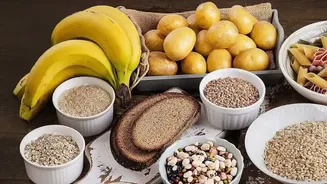
A green banana isn't just less sweet; it's a nutritional powerhouse in its own right, largely due to its high concentration of resistant starch. Resistant starch is a type of carbohydrate that, as its name suggests, 'resists' digestion in the small intestine. Instead, it travels to the large intestine where it acts as a prebiotic, feeding the beneficial bacteria in your gut. This process supports overall gut health. Because it isn't broken down into sugar quickly, resistant starch has a minimal impact on blood sugar levels, giving green bananas a low glycemic index (GI) of around 30-42. This makes them a better choice for those managing blood sugar.
The Ripe Reward: Quick Energy and Antioxidants
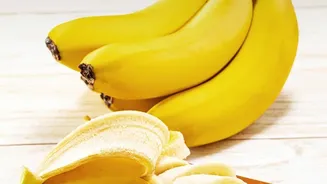
When you need a quick and easily digestible source of energy, a ripe yellow banana is the ideal choice. The simple sugars that develop during ripening—glucose and fructose—are readily absorbed by the body, providing a rapid energy boost perfect for a pre_workout or post_workout snack. As the banana ripens and develops brown spots, its antioxidant levels also increase. These antioxidants help combat cellular damage in the body. While the fiber content slightly decreases as resistant starch converts to sugar, ripe bananas are still a good source of nutrients like potassium, vitamin B6, and vitamin C. Their higher GI, around 51, reflects their role as a fast_acting energy source.
Ultimately, neither a raw nor a ripe banana is universally 'healthier'—their benefits simply serve different purposes. If your focus is on gut health and stable blood sugar, a firmer, greener banana is the superior option due to its high resistant starch content. It will keep you feeling fuller for longer and nourish your microbiome. On the other hand, if you need a quick, easily digested energy source for athletic performance or to recover from exercise, a sweet, ripe banana is more effective. The choice depends entirely on your personal health goals, digestive comfort, and, of course, your taste preference. People with diabetes may prefer greener bananas, while athletes might reach for yellow ones.