


The Ultimate Goal: A 'Human-Rated' Mission
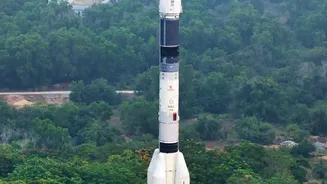
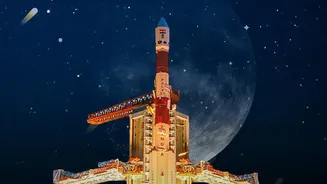
The primary objective of the Gaganyaan programme is to demonstrate India's capability for human spaceflight by launching a crew of three members to an orbit of 400 km for a mission lasting up to three days and bringing them back safely. But sending humans
to space is vastly more complex than launching satellites. Every component, from the rocket to the crew capsule, must be 'human-rated'. This is a rigorous certification process that ensures the entire system is exceptionally reliable and, most importantly, safe for astronauts. The upcoming test flights are all designed to validate the performance and safety of every critical system before a human crew ever steps on board.
Practice Makes Perfect: The Uncrewed Flights
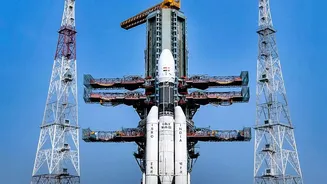
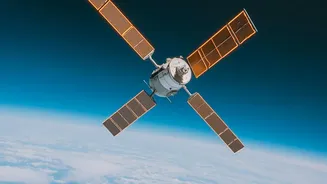
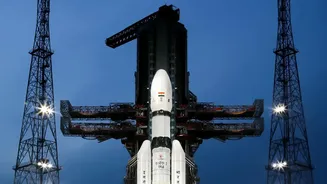
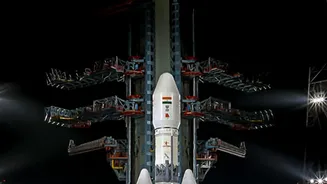
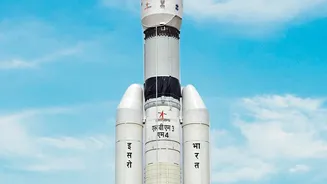
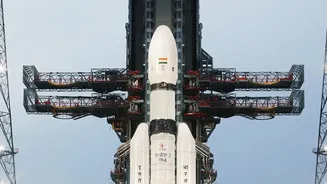
Before the main event, ISRO has planned multiple uncrewed missions. The first of these, Gaganyaan-1 (G1), is a full dress rehearsal without the astronauts. Targeted for late 2026, this mission will launch the Gaganyaan spacecraft into orbit using the human-rated LVM3 rocket, also known as HLVM3. It will test the performance of the orbital module, life support systems in a space environment, re-entry procedures, and recovery operations from the sea. These flights provide invaluable data on how the systems perform from launch to landing, allowing engineers to make crucial adjustments and perfect the entire sequence before the crewed launch, which is targeted for 2027.
Safety First: Mastering the Abort
What happens if something goes wrong during launch? This is where the Crew Escape System (CES) comes in. It's a critical safety feature designed to pull the crew module and its astronauts rapidly away from the rocket in case of an emergency. ISRO is conducting a series of 'abort missions' to perfect this system. A successful Pad Abort Test was conducted in 2018, simulating an emergency on the launch pad. More recently, the TV-D1 test vehicle mission in late 2023 successfully demonstrated an in-flight abort, proving the system works even when the rocket is speeding through the atmosphere. These tests are non-negotiable for ensuring the crew can be saved during the most critical phases of the launch.
Meet Vyommitra: The Humanoid Stand-In
On the first uncrewed Gaganyaan mission, a unique passenger will be on board: Vyommitra. Derived from the Sanskrit words for 'space' and 'friend', Vyommitra is a sophisticated female humanoid robot developed by ISRO. She is not just a dummy; Vyommitra can mimic human functions, monitor module parameters, operate switch panels, and even communicate. Her role is to simulate a human astronaut inside the crew module, providing vital data on how launch vibrations, radiation, and microgravity conditions will affect a human body. By using Vyommitra, ISRO can gather critical physiological and environmental data to ensure the cabin is perfectly safe and stable for future astronauts.
Building a Foundation for the Future
Each successful test flight is more than just a checked box on a list; it's a building block for India's future in space. The data gathered from the uncrewed flights, the validation of the escape system, and the performance of the human-rated rocket all build confidence and experience. This methodical, step-by-step approach ensures that when Indian astronauts finally lift off, they are flying on a system that has been tested and proven to be as safe and reliable as humanly possible. These test flights are not just precursors to the Gaganyaan mission; they are the very foundation of India's long-term ambitions in human space exploration, which include a future Indian space station, the Bharatiya Antariksh Station.