






Why Your Lighting Setup Matters
In the era of work-from-home, many of us have carved out office nooks in our living rooms, bedrooms, or dining areas. While we focus on the chair and desk, lighting is often an afterthought. Poor lighting, however, is a primary cause of eye strain, fatigue,
and headaches. Relying on a single overhead light often creates harsh shadows, while a lamp in the wrong spot can cause debilitating glare on your computer screen. The goal isn't just to make your space brighter; it's to create a comfortable, productive environment that supports your well-being throughout the workday. A well-lit space can improve mood, focus, and energy levels, turning a makeshift corner into a professional-grade workspace.
The First Step: Taming Glare
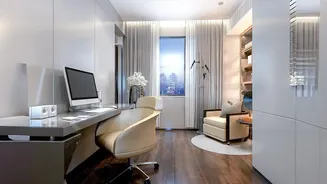
Glare is the enemy of comfortable computer work. It's the unwanted, bright light that reflects off your screen, forcing you to squint and strain. There are two main culprits: natural light from windows and poorly positioned artificial lights. The simplest fix is positioning. Your desk should ideally be placed perpendicular to a window, not directly in front of it or with your back to it. This allows you to enjoy natural light without it shining straight into your eyes or onto your screen. For artificial lights, avoid placing your desk directly under a bright overhead fixture and never have a lamp pointing at your monitor.
The Power of Layered Lighting
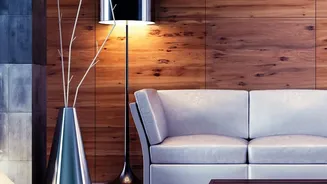
Interior designers and lighting experts swear by a technique called 'layered lighting', which is especially crucial for multi-functional spaces common in Indian homes. Instead of relying on one light source, you combine three types: ambient, task, and accent. Ambient Light: This is the general, overall illumination of the room, your base layer. It's the soft glow from a central ceiling fixture, recessed lights, or a floor lamp that fills the room and prevents dark corners. Good ambient light reduces the harsh contrast between your bright screen and a dark room, which can cause eye fatigue. Task Lighting: This is your focused light for work. A good, adjustable desk lamp is non-negotiable. It provides concentrated light right where you need it—on your keyboard or documents—without illuminating the entire room. This is the key to performing tasks without straining your eyes.
Choosing and Placing Your Desk Lamp
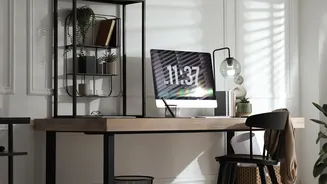
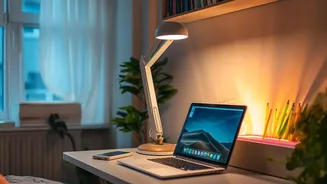
Your desk lamp is your most important lighting tool. To avoid creating shadows as you write, place the lamp on the opposite side of your dominant hand—if you're right-handed, it goes on the left. The light should be angled towards your work surface, not your screen or your face. An adjustable arm is crucial for getting this position just right. When choosing a bulb, opt for an LED. For brightness, something around 450-500 lumens is generally sufficient for desk work. For colour temperature, a neutral or cool white light (between 4000K and 5000K) is recommended to promote focus and alertness during the day.
Simple Fixes and Smart Adjustments
Beyond lamps, several small adjustments can make a big difference. Use the settings on your monitor to adjust brightness and contrast so it matches the light in the room around you. Many modern screens also have built-in blue light filters or 'night mode' settings that can make evening work easier on the eyes. If you can't move your desk away from a window, consider sheer blinds or curtains that diffuse harsh sunlight without blocking it completely. Finally, using dimmers on both your ambient and task lights gives you the ultimate control, allowing you to adapt your lighting to the time of day and the specific task at hand.