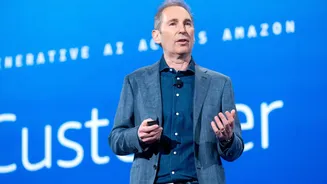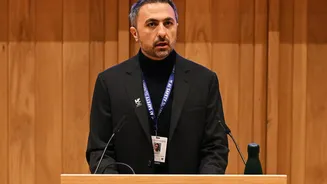





Dario Amodei, the CEO of AI-firm Anthropic, has made a prediction that has electrified the tech world and drawn skepticism from the medical community: AI could help make cancer a relic of the past in under a decade. Is this the dawn of an 'age of miracles'
or a case of tech optimism outpacing reality?
The Promise of AI-Powered Discovery
The foundation of this bold claim lies in artificial intelligence's rapidly growing ability to accelerate scientific research. AI systems can process and analyze massive datasets far beyond human capability, identifying patterns in genetics, proteins, and cellular behaviour that were previously hidden. Tech leaders like Amodei, and Google DeepMind's Demis Hassabis, argue that AI can compress what would have been decades of painstaking lab work into weeks or months. This includes predicting the three-dimensional shapes of millions of proteins, a critical step in understanding disease, which was a breakthrough for DeepMind’s AlphaFold program. The hope is that AI can help design new drugs, identify which patients will respond to which treatments, and even repurpose existing medicines with unprecedented speed.
Early Successes and New Partnerships
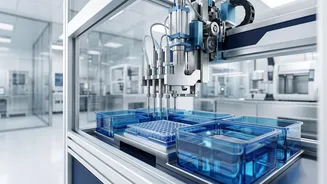
This is not just theoretical. Anthropic has already partnered with several biotech companies, including Bristol Myers Squibb, to use its AI models to speed up various stages of drug development. In one project with Generate Biomedicines, an AI-redesigned component of a CAR T-cell therapy, a treatment for blood cancers, was made more efficient. The new design improved the immune cells' ability to kill tumour cells in lab tests. Another collaboration focused on improving a drug candidate's ability to bind to its cancer-cell target. These early-stage successes fuel the narrative that AI is a transformative tool. However, it's crucial to note that this research remains in the preclinical phase, meaning the potential treatments have not yet been tested in human trials.
A Reality Check from Medical Experts
While the potential is undeniable, many oncologists and medical researchers urge caution regarding the 10-year timeline. They point out that cancer is not a single entity but over 200 distinct diseases, each with its own complexities. Identifying a promising molecule in a computer simulation is only the first of many hurdles. A drug development pipeline is incredibly long and expensive, typically taking over a decade with a very low success rate; only about 4% of cancer drugs that enter human testing eventually get approved. The process involves rigorous, time-consuming clinical trials to prove both safety and effectiveness, a stage that AI cannot simply bypass. As one oncologist noted, until an AI can 'actually think and do experiments itself at scale', a cure for all cancers in a decade remains unlikely.
The Strategy Behind the Statement
So why make such a bold claim? It serves multiple purposes for a company like Anthropic, which is reportedly heading towards a major IPO. Grand visions of solving humanity's biggest problems are powerful tools for attracting investment, recruiting top engineering talent, and capturing public imagination. Amodei himself has argued that the AI industry needs to deliver tangible, world-changing results to win public trust. Suggesting AI can help cure cancer is a way to frame the technology's purpose in the most positive and ambitious light possible. While critics have called the prediction 'hype' intended to inflate expectations, it also sets a high bar and a clear, motivating mission for the company and the wider tech industry.