



The Mind-Bending Numbers
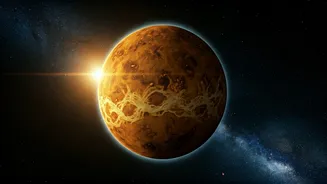
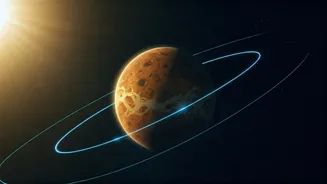
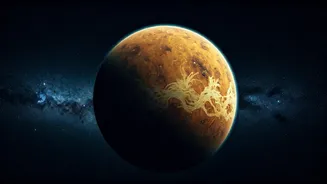
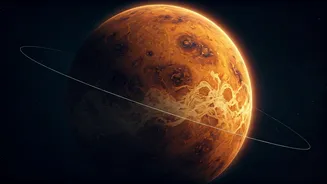
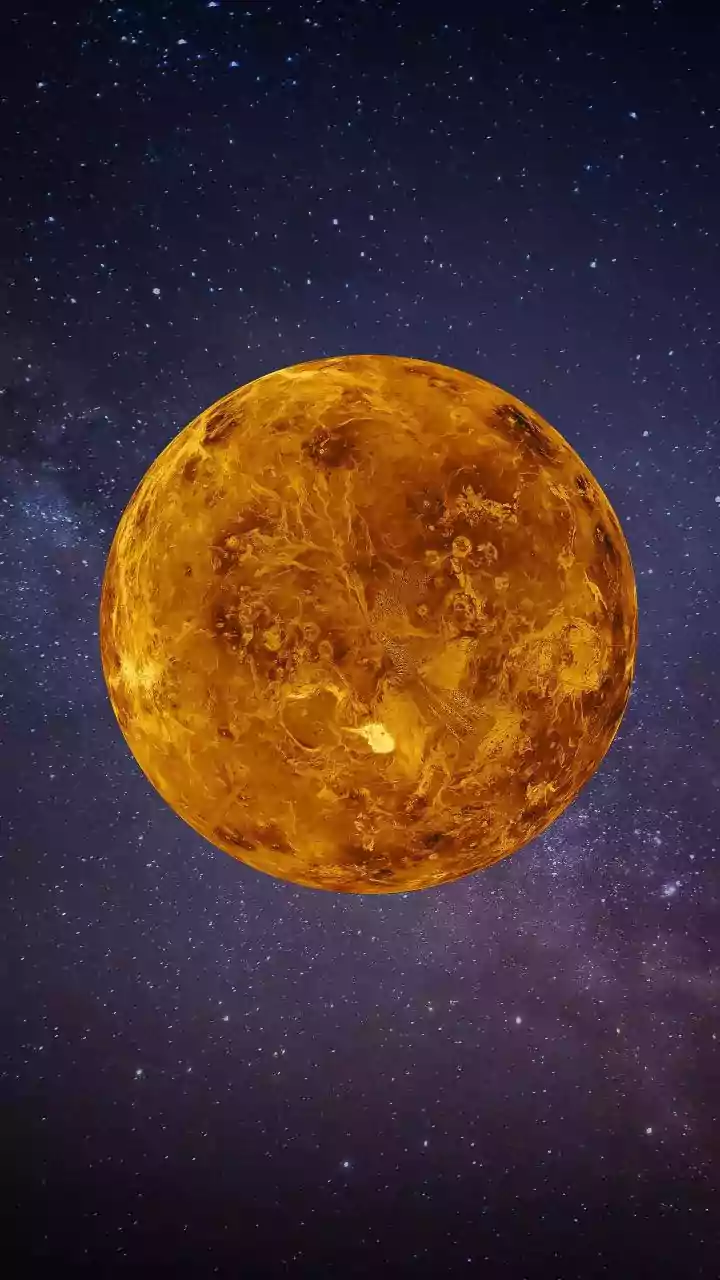
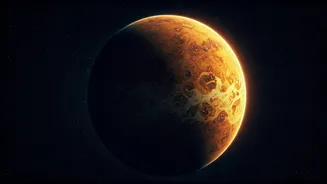
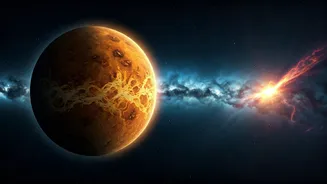
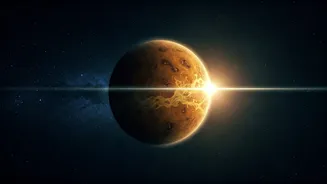
Let’s get the basic, baffling numbers out of the way first. A year on Venus—the time it takes to complete one full orbit around the Sun—is about 225 Earth days. However, a single day on Venus—the time it takes for the planet to complete one full rotation
on its axis—is approximately 243 Earth days. Yes, you read that right. If you were born on Venus, you'd celebrate your first birthday before you'd even lived through your first full day. This isn't a trick or a miscalculation; it's a fundamental and bizarre feature of our 'sister planet,' making its calendar completely alien to our own.
How Is This Even Possible?
To understand this cosmic paradox, we need to separate two distinct motions: rotation and revolution. A planet's 'day' is determined by its rotation, or how long it takes to spin 360 degrees on its axis. A planet's 'year' is determined by its revolution, or how long it takes to travel once around the Sun. For Earth, these two clocks are wildly different: our rotation takes 24 hours, while our revolution takes 365.25 days. The reason Venus’s timeline is so strange is because it has an incredibly fast orbit combined with an unbelievably slow spin. It zips around the Sun relatively quickly, but it turns on its own axis at a snail's pace, slower than any other planet in our solar system.
Venus Spins the Wrong Way
Adding another layer of weirdness, Venus spins backwards. Unlike Earth and most other planets in our solar system, which rotate counter-clockwise (prograde), Venus rotates clockwise. This is known as retrograde rotation. If you could stand on the surface of Venus without being instantly crushed by its pressure and burned by its heat, you would see the Sun rise in the west and set in the east. This backward, lazy spin is a crucial part of why its day-year relationship is so distorted. Scientists aren't 100% certain why Venus is such an oddball. The leading theories suggest a massive collision with another planetary body deep in its history, which could have knocked it off-kilter and slowed its spin, or that the gravitational pull of its incredibly thick, heavy atmosphere created a tidal drag over billions of years, gradually braking its rotation to a near-standstill.
A Tale of Two Days
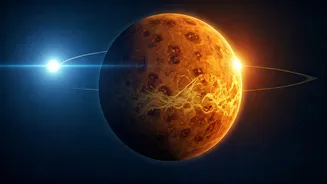
Here’s where it gets even more interesting for a potential Venusian colonist. The 243-day figure refers to a 'sidereal day'—the time it takes to complete one 360-degree turn relative to the distant stars. But what about a 'solar day,' the time from one sunrise to the next? Because Venus is orbiting the Sun while it slowly spins backwards, these two measurements are very different. The combination of its slow retrograde rotation and its orbit means that a solar day on Venus is 'only' about 117 Earth days long. So, while a full rotation takes longer than a year, you would experience a sunrise and sunset about twice per Venusian year. It’s still an incredibly long time to wait for morning to come.
What This Means for the Planet
This ultra-slow rotation has profound effects on Venus. On Earth, our relatively quick spin helps distribute the Sun's energy, creating the day-night temperature cycles we’re used to. On Venus, one side of the planet faces the Sun for months at a time, while the other is plunged into a long, dark night. You might expect this to create extreme temperature differences, but Venus's famously thick atmosphere of carbon dioxide acts like a hyper-efficient global blanket. This atmosphere traps heat and powerful winds whip it around the planet at speeds up to 360 km/h, ensuring that both the day and night sides remain at a fairly uniform, scorching 465°C. This runaway greenhouse effect makes Venus the hottest planet in the solar system, a toxic and inhospitable world where this bizarre timekeeping is just one of many extreme characteristics.