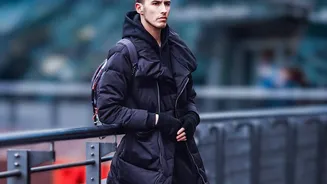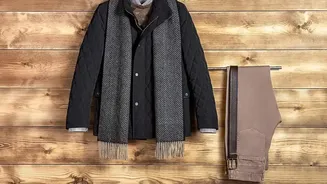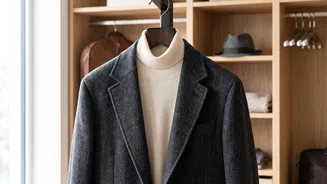






The winter office dilemma is real: how do you stay warm without looking like you’ve been inflated? The secret isn’t fewer layers, but smarter layers. A simple, deliberate approach to buttoning is the key to a sharp, streamlined silhouette.
The Core Problem: Why Layers Bunch
Fabric bunching
is a simple matter of physics. When you wear multiple layers of clothing, each layer has the potential to move independently. As you walk, sit, and reach, fabrics rub against each other, creating friction. Without anchor points, this movement causes untucked shirts to ride up and sweaters to gather around your waist, creating unsightly lumps and bulk. The goal of layering is to add warmth and visual depth, not to create a rumpled, shapeless look. The key is to control this movement by creating a cohesive system where each layer is secured in a way that contributes to a clean line from your torso to your waist. This is where strategic buttoning comes into play, transforming a loose collection of garments into a single, polished outfit.
The Foundation: Securing Your Base
Everything starts with the layer closest to your skin. Whether it's a t-shirt or a proper undershirt, this base layer must be secured to prevent the entire system from failing. The most effective method is to tuck it in properly. A simple tuck into your trousers can work, but for a more robust solution, some men tuck their undershirt into their underwear. This might sound unusual, but it creates a firm anchor that prevents the shirt from pulling free and bunching up as you move throughout the day. A well-fitted base layer, ideally one with some stretch, is also less likely to have excess fabric that can bunch up in the first place. This first step ensures the foundation of your layered look is smooth and stable.
The Dress Shirt: Creating a Clean Canvas
Your dress shirt is the next critical piece. An ill-fitting or poorly managed shirt is the primary culprit behind a bulky appearance. First, ensure the shirt fits well—not so tight that it pulls, but not so loose that there's excess fabric billowing around your waist. When tucking it in, aim for a clean, flat front. Techniques like the 'military tuck', which involves folding excess fabric at your sides into two neat pleats before fastening your trousers, can create a very sharp line. Buttoning your shirt correctly also plays a role. While you may not button the very top button unless wearing a tie, ensuring the rest are fastened keeps the placket straight and prevents gaping, which contributes to a neater overall appearance under a sweater or blazer.
The Mid-Layer: The Cardigan and Sweater Rule
The mid_layer, such as a cardigan, vest, or V_neck sweater, is where strategic buttoning becomes most visible. A common mistake is to either leave a cardigan completely unbuttoned, allowing it to flare out, or to button it all the way down. Both can disrupt your silhouette. For a cardigan or vest, the rule is simple: always leave the bottom button undone. This tradition, supposedly started by King Edward VII, has a practical modern purpose: it prevents the garment from pulling and bunching around your hips when you sit down and creates a more natural V_shape that elongates the torso. This small detail allows the fabric to drape properly over the waistband of your trousers, maintaining a clean transition between your upper and lower body.
The Final Lock: Buttoning Your Blazer
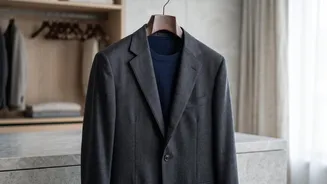
The blazer or suit jacket is the final piece that locks everything into place. Its buttoning rules are the most established and crucial for a polished look. For a two_button jacket, the rule is 'always, never': fasten the top button when standing and never fasten the bottom one. For a three_button jacket, it’s 'sometimes, always, never': the top is optional, the middle is always buttoned (when standing), and the bottom is never. These rules aren't just for show. They are based on how modern jackets are cut. Buttoning the bottom button restricts movement and causes the jacket to pull and create an unflattering 'X' shape across your stomach. By following the correct buttoning practice, the jacket maintains its intended shape, cinching slightly at the waist and securing all the layers underneath into one sleek, unified profile.