

The Modern Posture Problem
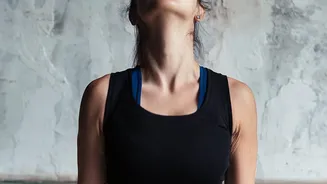
In an age dominated by screens, 'tech neck' has become a widespread issue. Constantly looking down at smartphones, tablets, and laptops forces the head forward, placing significant strain on the cervical spine. An adult head weighs roughly 4.5 to 5 kilograms,
but for every inch it tilts forward, the pressure on the spine doubles. This sustained, unnatural posture leads to the tightening of chest muscles and the weakening of upper back muscles, resulting in the characteristic slumped or rounded shoulders. Over time, this imbalance can cause chronic pain in the neck, shoulders, and back, and even reduce lung capacity. The key to countering this is to introduce movements that do the exact opposite: open the chest, strengthen the back, and realign the spine.
Marjaryasana-Bitilasana (Cat-Cow Pose)
This gentle, flowing sequence is a foundational yoga movement for improving spinal flexibility and relieving tension. It's an excellent warm-up that mobilises the entire back, from the neck down to the tailbone, making it perfect for counteracting the stiffness from prolonged sitting. How to do it: Start on your hands and knees in a tabletop position, with your wrists directly under your shoulders and your knees under your hips. As you inhale (Cow Pose), drop your belly towards the mat, lift your chest and chin, and gaze upward, creating a gentle arch in your spine. As you exhale (Cat Pose), round your spine toward the ceiling, tucking your chin to your chest and pressing the mat away with your hands. Continue flowing between these two poses for 8-10 breaths, synchronising your movement with your breath.
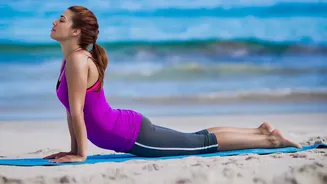
Bhujangasana (Cobra Pose)
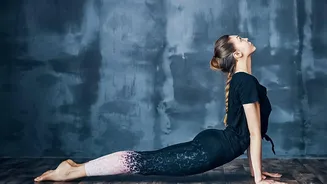
Cobra Pose is a powerful backbend that directly targets the slouched posture of tech neck. It strengthens the back muscles, particularly the spinal extensors, while stretching the chest, shoulders, and abdomen. This helps to pull the shoulders back and open up the chest, reversing the forward hunch. How to do it: Lie on your stomach with your legs extended behind you and the tops of your feet on the floor. Place your palms on the mat under your shoulders, keeping your elbows tucked in close to your ribs. Press the tops of your feet and your thighs into the floor to stabilise your lower body. On an inhale, begin to lift your head and chest off the floor, using your back muscles to initiate the movement. Keep your neck long and your gaze neutral. Only press with your hands enough to support the lift, keeping a slight bend in the elbows. Hold for 3-5 breaths, then exhale and release back down.
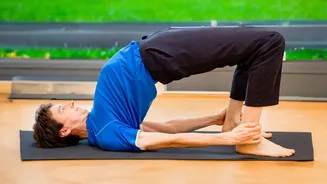
Setu Bandhasana (Bridge Pose)
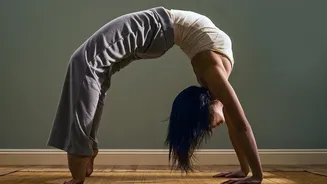
Bridge Pose is a beginner-friendly backbend that strengthens the glutes, hamstrings, and back, while providing a wonderful stretch for the chest, neck, and hip flexors. By lifting the hips and opening the chest, it counteracts the effects of sitting and slouching, improving overall posture and spinal flexibility. How to do it: Lie on your back with your knees bent and your feet flat on the floor, hip-width apart. You should be able to just touch your heels with your fingertips. Rest your arms alongside your body with your palms facing down. On an exhale, press your feet and arms into the floor as you lift your hips off the ground. Clasp your hands together underneath your body and roll your shoulders inward to help open the chest even more. Keep your thighs parallel and your neck relaxed. Hold for 5-8 breaths, then release your hands and slowly roll your spine back down to the floor.
Gomukhasana (Cow Face Pose Arms)
While the full pose involves a deep hip stretch, focusing just on the arm variation of Gomukhasana is one of the most effective ways to target tight, rounded shoulders. This intense stretch opens the chest, triceps, and the often-tight latissimus dorsi muscles along the sides of your back, dramatically improving shoulder mobility. How to do it: Sit in a comfortable position with a tall spine. Reach your right arm straight up towards the ceiling, then bend the elbow so your right hand drops down behind your neck. Take your left arm out to the side, rotate it internally so your thumb points down, and then sweep it behind your back, reaching your left hand up to clasp your right fingers. If your hands don’t touch, hold a strap or towel between them. Sit tall, keep your chest open, and hold for 5 breaths. Release and repeat on the other side.