






What is Satellite Servicing?
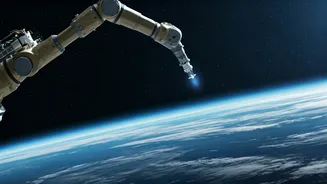
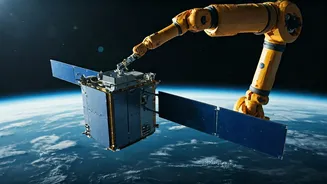
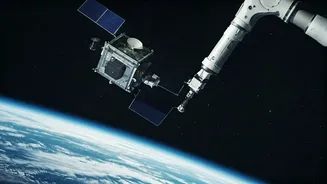
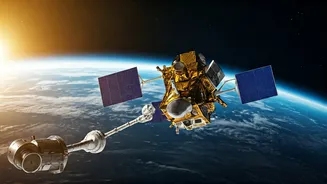
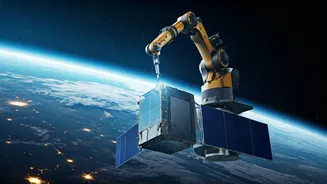
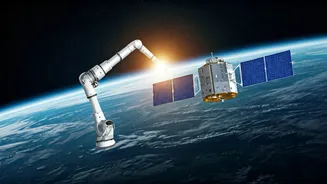
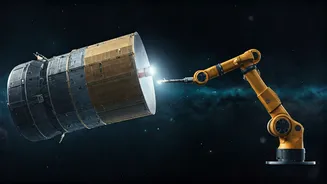
On-orbit servicing is essentially roadside assistance for spacecraft. It involves sending specialized robotic vehicles to rendezvous with satellites already in space. These servicers can perform a range of tasks, including refueling, repairing or replacing
faulty components, upgrading hardware, and repositioning satellites to new orbits. Some missions are even designed to capture and safely deorbit space debris, acting as cosmic tow trucks. The goal is to move away from a model where hugely expensive assets are simply abandoned, toward a more sustainable and economically efficient one. This shift is enabled by advanced robotics, autonomous navigation, and sophisticated docking technologies.
A Multi-Billion Dollar Market in the Making
The economic case for satellite servicing is compelling. A single life extension mission can add five or more years to a satellite's revenue-generating lifespan for a fraction of the cost of building and launching a replacement. This has satellite operators, from commercial telecommunications giants to government agencies, taking notice. Market forecasts project the on-orbit servicing industry to grow significantly, from around $3.7 billion in 2026 to potentially over $8 billion by 2034, with some estimates even higher. The primary drivers are clear: a desire to maximize the value of existing assets, the increasing congestion of orbital paths with over 10,000 active satellites, and a growing need for sustainable space operations.
The Pioneers of In-Orbit Repair
Several companies and space agencies are leading the charge. Northrop Grumman's subsidiary, SpaceLogistics, has already proven the concept with its Mission Extension Vehicles (MEV). MEV-1 and MEV-2 successfully docked with Intelsat communication satellites in 2020 and 2021, respectively, taking over propulsion and extending their operational lives. The company is now developing a more advanced Mission Robotic Vehicle (MRV), equipped with robotic arms to install 'Mission Extension Pods'—essentially jetpacks for aging satellites. Other key players include Japan-based Astroscale, which is focused on debris removal and life extension services, and Swiss startup ClearSpace, which is contracted by the European Space Agency (ESA) for a debris removal mission. Companies like Maxar Technologies and various government agencies like DARPA and NASA are also heavily invested in developing the required technologies.
More Than Just a Fix: The Broader Opportunity
While life extension for multi-million dollar geostationary (GEO) satellites is the most mature segment, the opportunity extends much further. The rapid growth of mega-constellations in Low Earth Orbit (LEO), like those from SpaceX and OneWeb, creates a high-volume demand for inspection, maintenance, and end-of-life deorbiting services. Active Debris Removal (ADR) is becoming a critical service to manage the growing threat of space junk, with companies like Astroscale demonstrating capabilities to approach and characterize derelict rocket bodies. Looking further ahead, on-orbit servicing is a gateway to even more ambitious concepts, such as in-space assembly of large structures and the development of orbital logistics hubs or 'gas stations'.
The Challenges Ahead
Despite the promise, the industry faces hurdles. The technological complexity is immense; missions require flawless autonomous rendezvous and robotic manipulation, where a single error could damage a high-value asset or create more debris. The economic model is still evolving, as operators weigh the cost of a servicing mission against a full replacement. Furthermore, the regulatory landscape for these novel commercial space activities is still being written, covering everything from operational liability to international agreements. Overcoming these challenges will require not just technological innovation but also close collaboration between private industry and government agencies to establish clear standards and practices for a sustainable space economy.