






An Ancient Story Gets Older
For generations, the Indus Valley Civilization was understood to have flourished around 5,500 years ago, or roughly 3500 BCE. This placed it alongside ancient Mesopotamia and Egypt as one of the world's great cradles of civilization. However, groundbreaking
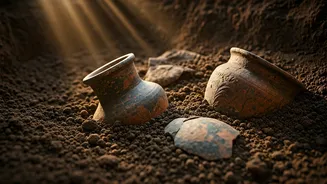
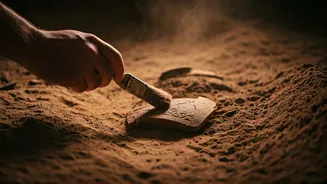
research at sites in Haryana, such as Bhirrana and Rakhigarhi, is radically changing this timeline. Archaeologists from IIT Kharagpur and the Archaeological Survey of India (ASI) have unearthed evidence suggesting that settlements in this region could be as old as 8,000 years. This doesn't just add a few centuries; it potentially repositions the Indus Valley as the oldest of these foundational urban cultures. The evidence comes from dating pottery shards and animal remains found at deep, previously unexcavated levels of these sites, painting a new picture of a long, continuous history that began far earlier than ever imagined.
What 'Civilization' Meant Back Then
The term “civilization” often brings to mind massive cities, but the story 5,500 years ago, during the Early Harappan phase, was one of gradual development. The evidence points to the growth of villages and towns, not yet the sprawling metropolises like Mohenjo-Daro or Harappa. These early communities were proto-urban, marking a transition from purely agricultural life. They established robust trade networks, with materials found at sites like Harappa sourced from hundreds of kilometers away. They lived in organized settlements, some featuring subterranean dwellings cut into the soil and plastered with clay, as found at Bhirrana. These weren't primitive societies; they were sophisticated communities laying the groundwork for the massive urban explosion that would follow in the Mature Harappan period.
The Science of Looking Back
So how can scientists be so sure about these new, much older dates? The answer lies in advanced scientific techniques. One key method is optically stimulated luminescence (OSL), which can determine when pottery fragments were last exposed to sunlight—essentially, when they were fired. This method allows archaeologists to date the artifacts themselves. Another crucial tool is radiocarbon dating, which is used on organic materials like animal bones and charcoal from ancient hearths to determine their age. By analyzing remains of cows, goats, and deer found at sites like Bhirrana, researchers can build a timeline not just for human activity but also for the climate in which these early people lived. These scientific methods provide concrete data that moves the discussion from educated guesses to evidence-based conclusions, forming the backbone of this historical re-evaluation.
Reshaping India's Place in World History
The significance of pushing back the origins of the Indus Valley Civilization is immense. For decades, the dominant narrative often centered on Mesopotamia as the singular starting point of urban life. These new findings champion a different story: one of independent and parallel development. The evidence from sites like Bhirrana and Rakhigarhi suggests an indigenous evolution of civilization on the Indian subcontinent, from early agricultural villages to a full-fledged urban society. Recent genetic studies on skeletal remains from Rakhigarhi further support this, showing a lineage ancestral to most modern Indians without significant external migration during that formative period. This challenges old theories of civilizational development being imported from the West and solidifies the Indus-Sarasvati region as a primary center of human innovation and culture in its own right.
A Legacy That Endures
Why does a 2,500-year revision to ancient history matter today? It profoundly deepens the sense of cultural continuity in India. The people of the Early Harappan phase were not just building villages; they were creating a cultural template. The traditions seen in their pottery, their early forms of art—like a potsherd engraving from Bhirrana resembling the famous 'Dancing Girl' of Mohenjo-Daro—and their societal structures did not simply vanish. They evolved, influencing subsequent generations and contributing to the rich tapestry of Indian culture. Understanding that this story began not 5,500 but perhaps 8,000 years ago provides a powerful link to an incredibly deep past. It reinforces that the subcontinent has been a hub of complex society and innovation for millennia, a legacy that continues to shape the identity and heritage of modern India.