



A staple in countless South Indian homes, upma is far more than just a simple semolina porridge. This humble dish transforms across state lines, reflecting the diverse culinary traditions of the region. Here’s a journey through its many delicious avatars.
The Classic: Rava Upma
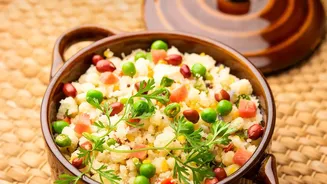
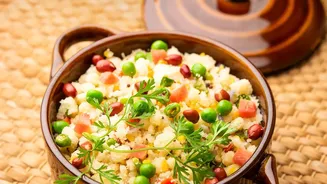
This is the most widely recognized version of upma, cherished for its simplicity and comforting taste. Made from dry-roasted semolina (rava or sooji), its preparation is a study in culinary fundamentals. The process starts with a classic tempering (tadka) of mustard seeds, urad dal (split black gram), and chana dal (split chickpeas) crackling in hot oil or ghee. Curry leaves, ginger, and green chillies are added for aroma and a gentle heat. Onions are sautéed until translucent before water is brought to a boil, and the roasted rava is slowly stirred in to create a soft, fluffy texture. Garnished with cashews, it's a dish that is both nourishing and quick to prepare.
Karnataka's Khara Bath
Head to Karnataka, and you'll find Khara Bath, a spicier and more flavourful cousin of the classic rava upma. The name itself signifies its savoury and spicy nature. What sets it apart is the addition of a special spice blend, often a vangi bath powder or a dedicated masala powder, which gives it a distinctive aroma and a reddish-yellow hue. Loaded with finely chopped vegetables like carrots, beans, and capsicum, Khara Bath is a more substantial meal. In Bengaluru, it's famously served alongside its sweet counterpart, Kesari Bath, in a combination known as 'Chow Chow Bath'.
Tamil Nadu's Arisi Upma
Moving to Tamil Nadu, the primary grain changes. Arisi Upma is made not with semolina but with coarse, broken raw rice (arisi). This version is a traditional breakfast in many Tamil Brahmin households and has a distinctly different texture and flavour. The rice is often ground with toor dal (pigeon peas), black peppercorns, and cumin seeds. The tempering remains similar, but the use of coconut oil can enhance its unique taste. This rice upma, also known as Akki Tari Uppittu in parts of Karnataka, offers a heartier, more rustic experience.
Andhra's Pesarattu Upma
In Andhra Pradesh and Telangana, upma gets a creative partner. Pesarattu Upma is a beloved breakfast combination where a soft, savoury upma is stuffed inside a crispy crepe made from green moong dal, called a pesarattu. The pesarattu itself, unlike other dosas, requires no fermentation and is made from a batter of soaked whole green gram, ginger, and green chillies. The crepe is made, a generous layer of freshly made upma is spread in the centre, and it's folded over. Typically served with a spicy ginger chutney, it's a protein-packed and incredibly flavourful meal.
Kerala's Coconut-Infused Uppumavu
In Kerala, upma, known as Uppumavu, often takes on a flaky texture and is enriched with coconut. While the base is typically roasted rava, the dish is finished with a generous amount of freshly grated coconut, which adds a subtle sweetness and richness. The tempering remains a core part, featuring mustard seeds, lentils, and curry leaves. A unique local tradition is to serve this savoury Uppumavu with a side of ripe banana, creating a delightful contrast of sweet and savoury in every bite.
The versatility of upma means it has adapted beautifully to modern tastes and health trends. Semolina is often replaced with other grains like vermicelli (semiya upma), broken wheat, or oats for a fibre-rich alternative. With a growing interest in ancient grains, millet upma, using varieties like foxtail millet (thinai), has become increasingly popular for its nutritional benefits. Another common and quick snack is Bread Upma, where cubes of bread are tossed in a tempering with onions and tomatoes for a fast and flavourful meal.