


The Challenge of Deep Space Logistics
Establishing a permanent human presence on the Moon, a core goal of the Artemis program, isn't just about getting there; it's about staying there. The biggest obstacle is the incredible cost and difficulty of launching supplies from Earth. Every kilogram
of water, food, or equipment must be blasted into space, a process that is both expensive and limits the scale of any off-world settlement. For a lunar base to be truly sustainable, astronauts need to use local materials, a concept known as In-Situ Resource Utilization (ISRU). And the most vital resource they need to produce is oxygen. While essential for breathing, its most significant use is as a component of rocket propellant, which is mostly oxygen by mass. Manufacturing propellant on the Moon could transform it from a destination into a refueling station for missions to Mars and beyond.
A Barren, Yet Oxygen-Rich, World
At first glance, the Moon appears to be a desolate, airless world. However, the fine grey dust and rock covering its surface, known as lunar regolith, is surprisingly rich in oxygen. About 45% of the regolith's mass is oxygen, but it's chemically locked away inside oxide minerals, like silica and iron oxide. The challenge for scientists has been to develop a reliable and efficient way to break these strong chemical bonds and release the oxygen gas. Cracking this code is the key to unlocking the Moon's potential and making long-duration missions feasible. Recent breakthroughs show that this is no longer science fiction, but a tangible engineering goal.
Cooking Rocks with Lasers and Sunlight
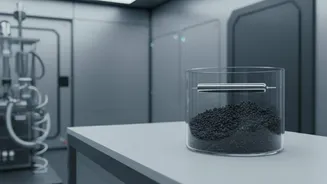
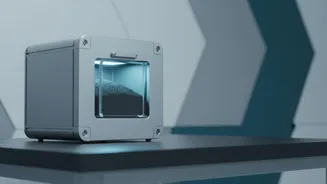
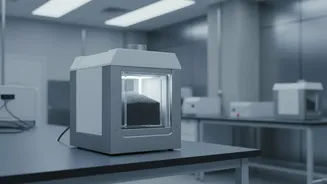
Several methods for oxygen extraction are being explored, but one of the most promising is carbothermal reduction. In recent tests, NASA scientists have used a powerful laser to simulate concentrated sunlight, heating simulated lunar soil to temperatures over 1,600°C inside a reactor. This intense heat, combined with a carbon source like methane, causes the oxides in the regolith to break down, releasing carbon monoxide. This gas is then processed in subsequent steps to separate the oxygen. NASA's Carbothermal Reduction Demonstration (CaRD) project has successfully performed this extraction in a vacuum chamber, simulating the airless lunar environment. These tests, conducted at Johnson Space Center with partners like Sierra Space, are proving the core technology is viable.
From Lab Prototypes to Lunar Missions
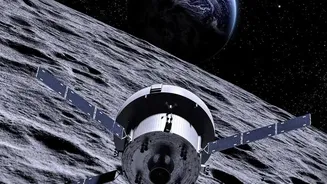
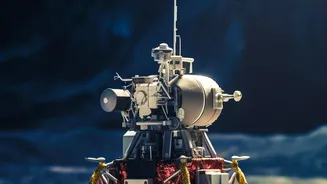
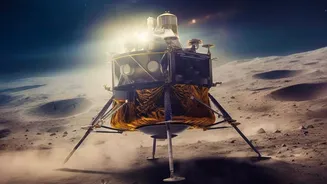
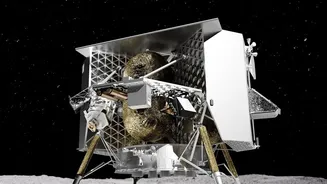
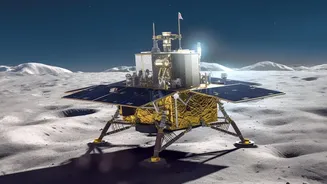
The success of these ground-based experiments is a critical milestone, moving the technology from theory to a proven concept. The goal is to advance these systems to a high technology readiness level, preparing them for deployment on an actual lunar mission. NASA and its commercial partners plan to send a series of robotic landers to the Moon's South Pole throughout the late 2020s. These missions will not only scout locations for a future base but will also carry pilot plants and technology demonstrators. These uncrewed missions will test the oxygen extraction hardware in the harsh lunar environment, paving the way for larger, more permanent facilities that can support astronauts. The plan is to build capability incrementally, starting with small-scale tests and building up to an infrastructure that can support long-term habitation.
Enabling the Artemis Base Camp
The ability to produce oxygen on-site is a cornerstone of NASA's Artemis Base Camp concept. This planned outpost near the Moon's South Pole is envisioned to house astronauts for up to two months at a time, requiring a reliable source of life support and propellant. By harnessing lunar resources, NASA can drastically reduce its dependence on Earth-based supply chains. Not only does this cut mission costs, but it also increases safety and self-sufficiency for lunar crews. The oxygen and metal byproducts from regolith processing could be used to create water, fuel, and even construct infrastructure. This technology directly enables the long-term, sustainable human presence on the Moon that NASA is actively working toward, transforming our relationship with our nearest celestial neighbour.