








The Wisdom of Seasonal Eating
The Indian monsoon is more than just a weather pattern; it's a culinary season with its own rules. Traditional wisdom, often rooted in Ayurveda, suggests that this is a time when our digestive fire (agni) is weaker. The humidity can make us feel sluggish,
and the risk of water-borne infections increases. This is why our diet naturally shifts towards foods that are light, easy to digest, and immunity-boosting. Fried snacks like pakoras might be the first thing that comes to mind, but the real heroes of the monsoon plate are the vegetables that thrive in this season, offering both comfort and wellness. Among them, snake gourd and brinjal stand out for their versatility and suitability for the climate.
The Humble Power of Snake Gourd
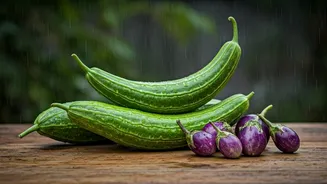
Often overlooked, the snake gourd (known as Chichinda in Hindi, Padwal in Marathi, and Pudalankai in Tamil) is a true monsoon gem. Its pale green, serpentine form might seem unusual, but its benefits are straightforward. Composed of over 90% water, it’s incredibly hydrating and cooling for the body, helping to counteract the mugginess of the season. It’s also extremely low in calories and rich in fibre, which aids digestion when the system is naturally slow. Its mild, slightly sweet flavour makes it a fantastic canvas for spices. It doesn’t overpower a dish; instead, it gracefully absorbs the flavours of whatever it’s cooked with, making it a team player in the kitchen.
Cooking with this Slithering Wonder
The secret to delicious snake gourd lies in its preparation. Due to its high water content, it cooks quickly. A simple stir-fry (poriyal) with mustard seeds, curry leaves, and fresh coconut is a South Indian staple that brings out its delicate taste. In North India, it’s often used to make a light curry or stuffed with a spiced mixture of gram flour or lentils before being pan-fried. Another popular preparation is a kootu, a comforting lentil-and-vegetable stew, where the snake gourd becomes tender and succulent. The key is not to overcook it, preserving a slight bite that gives it a satisfying texture.
Brinjal: The Reigning Monarch
If snake gourd is the quiet achiever, brinjal (or baingan) is the undisputed king. Available year-round, it takes on a special significance during the monsoon. Its hearty, meaty texture provides a satisfying richness that we crave in cooler, wetter weather. From the small, round purple varieties to the long, slender green ones, each type offers a slightly different texture and flavour profile. Brinjals are packed with nutrients, including antioxidants like nasunin (which gives them their purple colour), vitamins, and minerals. They are known to be good for heart health and blood sugar control, making them a smart choice for a comforting yet healthy meal.
Crafting Comfort with Brinjal
The brinjal’s true magic lies in its incredible versatility. The monsoon season is practically synonymous with the smoky aroma of Baingan Bharta, where the eggplant is roasted directly over a flame until charred, then mashed with onions, tomatoes, and spices. It’s a rustic, soul-satisfying dish best scooped up with a warm roti. In Bengal, thin slices of brinjal are pan-fried to a crisp perfection as 'Begun Bhaja,' the perfect accompaniment to dal and rice. In Andhra Pradesh, small brinjals are stuffed with a nutty, spicy masala to create 'Gutti Vankaya Kura.' Its ability to become creamy and rich in curries or smoky and intense when roasted makes it the perfect vehicle for the robust flavours of rainy-day cooking.