







The End of an Era
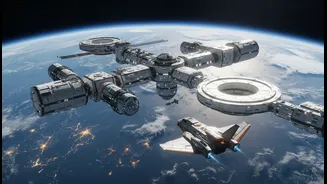
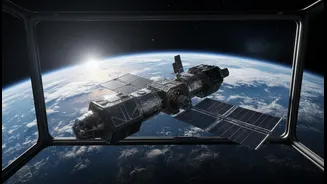
The International Space Station is one of the most incredible engineering feats in human history. Since its first crew arrived in 2000, it has been a constant symbol of global cooperation and scientific discovery. However, the orbital laboratory is aging.
Originally designed for a 15-year lifespan, the station is now facing structural challenges that make its long-term operation increasingly complex and costly. Recognizing this, NASA and its international partners are planning to deorbit the ISS around 2030, guiding it to a controlled end in a remote part of the Pacific Ocean. This looming retirement creates a critical question: without the ISS, where will astronauts live and work in space?
NASA's New Game Plan: From Owner to Renter
Instead of building a multi-billion-dollar ISS 2.0, NASA is making a fundamental shift in strategy. The agency plans to transition from being an owner and operator of space stations to becoming just one of many customers. Through its Commercial Low-Earth Orbit Destinations (CLD) program, NASA is funding private companies to design, build, and operate their own space stations. The idea is to create a robust commercial economy in Low Earth Orbit (LEO) — the region of space where the ISS currently resides. NASA will then buy services, like astronaut time and research capacity, from these commercial providers. This approach, the agency hopes, will drive down costs, spur innovation, and allow NASA to focus its resources on more ambitious deep-space exploration goals, like the Artemis missions to the Moon and Mars.
Meet the New Roommates
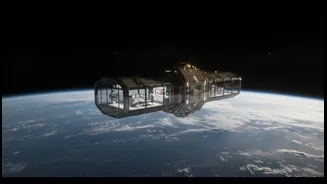
This new strategy has, as the headline suggests, invited a whole new group into the conversation about our future in orbit. A number of ambitious companies are now in a race to build the successors to the ISS. Axiom Space plans to first attach its own commercial modules to the ISS starting as early as 2026 before eventually detaching to become a free-flying station. Another major player is Starlab, a joint venture between Voyager Space and Airbus, which is developing a large, single-module station planned for a launch before the end of the decade. Blue Origin and Sierra Space are collaborating on Orbital Reef, envisioned as a "mixed-use business park" in space. And the company Vast is aiming to launch its own standalone station, Haven-1, as soon as early 2027. Very recently, in early July 2026, NASA released a draft request for proposals to formalize the next phase of this competition, signaling that the race is heating up.
A New Economy in the Stars
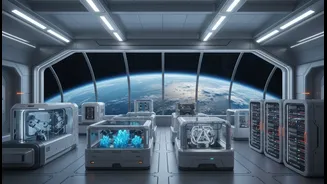
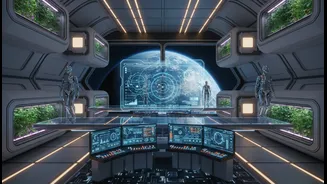
The implications of this shift are massive. If successful, it will mark the end of government-monopolized habitats in LEO and the beginning of a true space-based economy. These commercial stations won't just serve NASA astronauts. They plan to host private researchers, space tourists, foreign space agencies, and even in-space manufacturing operations. The vision is a future where multiple destinations are operating in orbit, creating a competitive marketplace for everything from scientific research to media production. However, significant challenges remain. There are serious concerns about whether these commercial stations will be ready before the ISS is retired, potentially creating a gap in U.S. human presence in LEO. The business case for these stations is still unproven, and ensuring safety and reliability will be paramount as NASA hands over the keys to private industry.