



Understanding Warrior Three
Virabhadrasana III, or Warrior Three, is a challenging intermediate standing pose that embodies strength and grace. [7] Named after Virabhadra, a fierce mythical warrior, this pose represents the moment he honed in on his target, balancing with precision
and power. [2] It requires you to balance on one leg while extending your other leg straight behind you, creating a straight line from your head to your heel, parallel to the floor. [5] This posture is a test of stability, demanding engagement from your entire body and unwavering concentration, making it a powerful tool for cultivating both physical and mental clarity. [1]
Core Benefits Beyond Balance
While famous for its balance-enhancing qualities, Warrior Three offers a wealth of other benefits. The pose is a fantastic strengthener for the ankles and legs, activating the glutes, hamstrings, and quadriceps. [3] It also tones the entire back body and shoulders while requiring deep engagement from the abdominal muscles to keep the torso stable and supported. [1, 7] This comprehensive muscle activation helps to improve overall posture, which can reduce the risk of back and neck pain. [2] Furthermore, the intense focus required to hold the pose—known as 'drishti' in yoga—sharpens concentration and calms the mind. [1]
Your Step-by-Step Guide
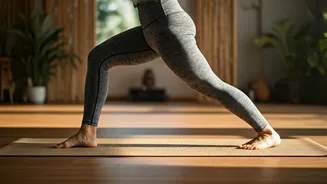
Transitioning into Warrior Three smoothly is key to finding stability. A great way to start is from a High Lunge. Begin with your right foot forward, knee bent over the ankle, and your left leg extended behind you. Bring your hands to your heart. Engage your core by drawing your navel toward your spine. [8] Begin to hinge forward from your hips, shifting your weight onto your right foot. [1] As you lean forward, start to lift your left leg straight back behind you. Continue to lift your leg and lower your torso until your body forms the shape of a capital 'T', parallel to the floor. [9] Keep the standing knee slightly bent to avoid locking it. [3] Actively press through your lifted heel as if stamping it on a wall behind you, and keep your hips level and square to the floor. [8] Hold the pose for several breaths before gently returning to your starting position, and then repeat on the other side. [2]
Common Misalignments to Avoid
Proper alignment is crucial for both stability and safety in Warrior Three. One of the most common mistakes is opening or 'stacking' the hip of the lifted leg. To correct this, actively roll the hip of the lifted leg downward until both hip points are facing the floor. [1, 12] Another frequent error is locking the standing knee, which can cause strain. Always maintain a micro-bend in the standing leg to protect the joint and engage the muscles. [3] Be mindful not to let the chest collapse or the lower back arch excessively. Instead, focus on creating one long line of energy, keeping your core tight to support your spine. [1, 9] Finally, don't let the lifted leg sag; keep it active and engaged by flexing the foot. [1]
Modifications for Every Body
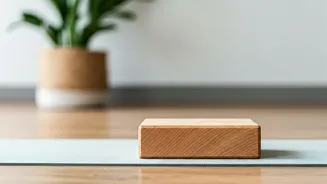
Warrior Three is an adaptable pose. If you are a beginner or find balancing difficult, use a wall or a sturdy chair for support. You can place your hands on the wall or the back of a chair as you hinge forward to help maintain balance. [2, 15] Using yoga blocks under your hands is another excellent way to bring the floor closer and find stability. [5] For a less intense version, you don't have to lift your back leg fully parallel to the floor; lift it as high as you comfortably can while maintaining good form. [1] Arm position can also be modified to make the pose more accessible. Instead of extending them forward, which is the most challenging variation, you can place your hands on your hips, bring them to your heart in a prayer position, or extend them out to the sides like airplane wings. [5, 11]