


The Sun's Unseen Fury
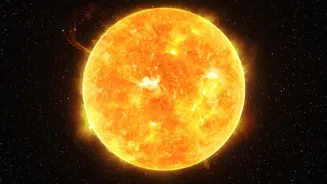
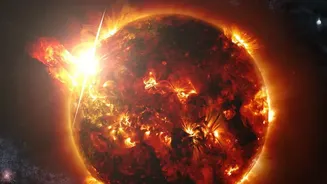
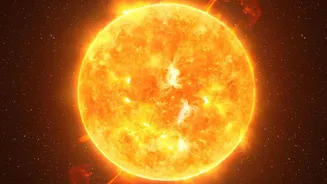
Space weather refers to the changing conditions in space, driven primarily by the sun. Far from being a quiet, constant star, the sun regularly ejects enormous clouds of magnetised plasma and radiation into space. These events, known as Coronal Mass Ejections
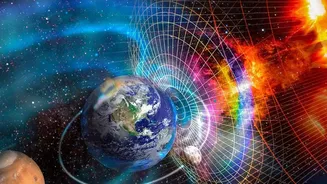
(CMEs), are massive explosions from the sun's outer atmosphere, the corona. When a CME is directed towards Earth, it can interact with our planet's magnetic field, triggering a geomagnetic storm. While these storms are responsible for the beautiful auroras, they also pose a significant threat to our technology-dependent civilisation.
A Man-Made Eclipse in Space
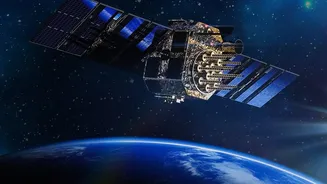
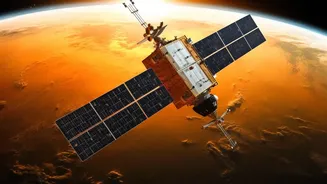
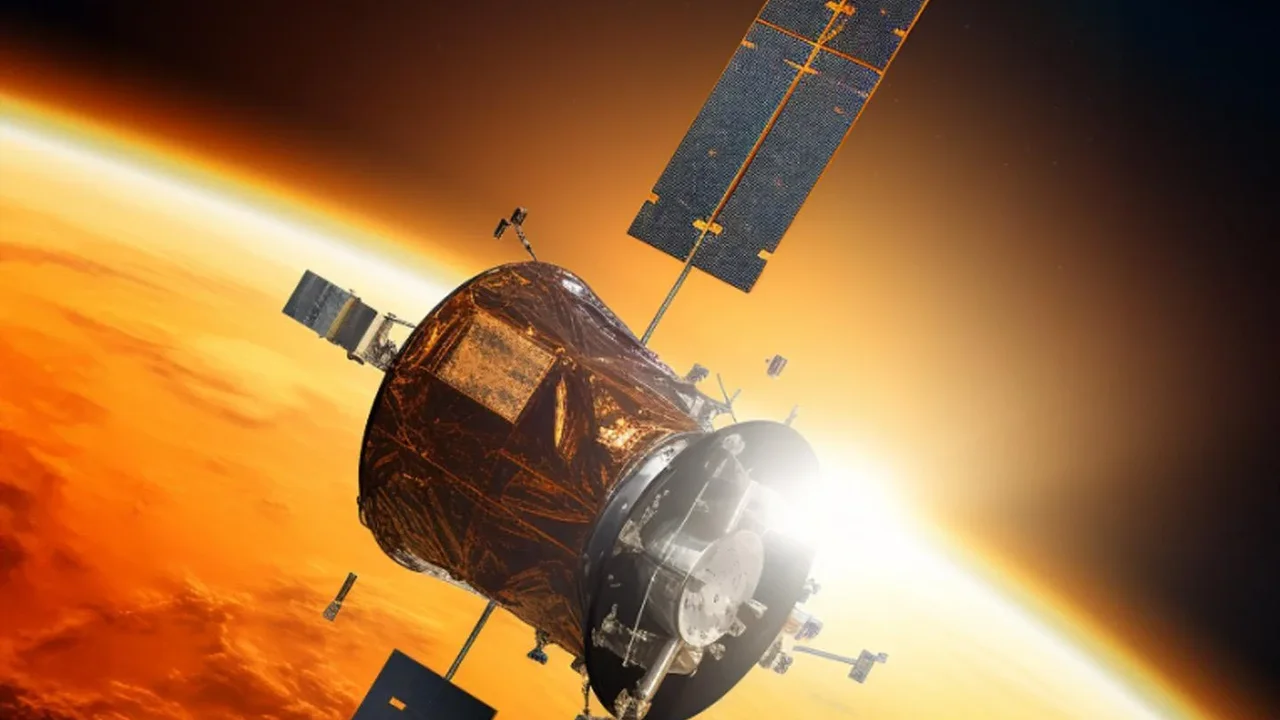
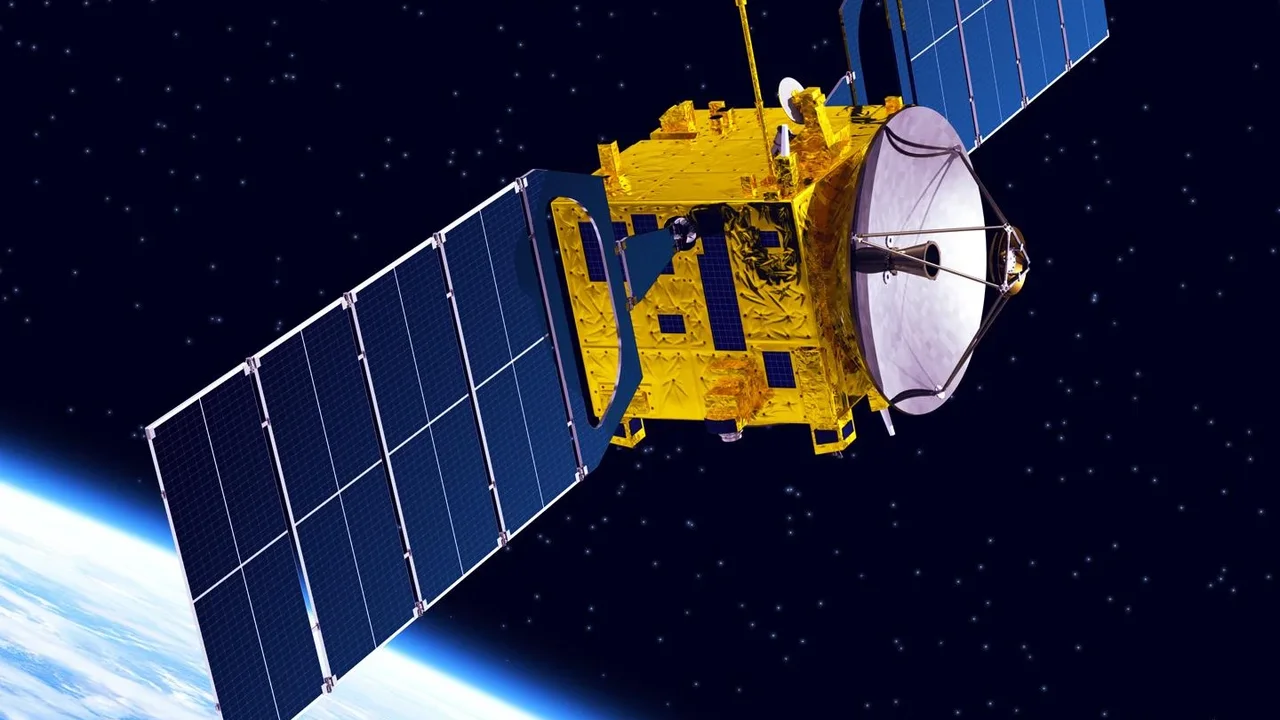
The sun's brilliant surface makes its much fainter corona, which is millions of times less bright, impossible to see. This is where a coronagraph comes in. Invented in the 1930s by Bernard Lyot, a coronagraph is a telescopic instrument that uses an occulting disk to block the direct glare of the sun, creating an artificial eclipse. This allows scientists to continuously observe the corona. When placed on satellites, coronagraphs are far more effective as they don't have to contend with the scattered light of Earth's atmosphere. These space-based observatories can watch for the tell-tale signs of a CME as it erupts from the sun.
The Critical Power of Prediction
The greatest value of satellite coronagraph data is the early warning it provides. By imaging a CME as it leaves the sun, scientists can determine its size, speed, and direction. Since these ejections travel much slower than the speed of light, this gives us anywhere from one to several days of notice before a potentially hazardous storm reaches Earth. This lead time is vital. It allows satellite operators to put their spacecraft into a protective safe mode, helps airlines reroute flights to avoid communication blackouts and radiation exposure near the poles, and gives power grid operators time to prepare for potential impacts.
Our Fragile Modern Infrastructure
The stakes are incredibly high. A severe geomagnetic storm can induce powerful electrical currents in long conductors on the ground, such as power lines and pipelines. This can overload grids, damage transformers, and lead to widespread, long-lasting blackouts, as happened in Quebec, Canada, in 1989. In space, the storm's energetic particles can damage satellite electronics, degrade solar panels, and alter orbits, threatening the communication, navigation (GPS), and weather forecasting services we rely on daily. Even small GPS errors can disrupt shipping, aviation, and precision agriculture.
India’s Eye on the Sun
Recognising this vulnerability, India has become a key player in space weather monitoring. The Indian Space Research Organisation's (ISRO) Aditya-L1 mission, launched in 2023, is the country's first dedicated solar observatory. Placed 1.5 million km from Earth at the L1 Lagrange point, it has an uninterrupted view of the sun. Its primary instrument, the Visible Emission Line Coronagraph (VELC), is designed to study the solar corona and provide crucial data on CMEs. By contributing to the global network of solar observatories, Aditya-L1 enhances our collective ability to forecast space weather and protect critical infrastructure on Earth.