






Before You Drive: The Pre-Monsoon Check
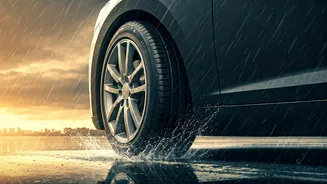
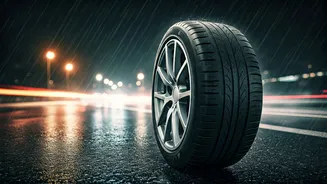
A safe journey in the rain begins before you even turn the key. Heavy rainfall can exploit any weakness in your vehicle, so a pre-monsoon check-up is non-negotiable. First, inspect your tyres. They are your only connection to the road. Ensure the tread
depth is at least 3mm for a better grip on wet surfaces, as worn-out tyres are a primary cause of skidding and hydroplaning. Next, check your wiper blades. If they leave streaks or make noise, replace them. Clear visibility is paramount. Finally, ensure all your lights—headlights, taillights, brake lights, and indicators—are working perfectly. They help you see and, just as importantly, be seen by others.
On the Road: Adjust Your Driving Style
Driving on wet roads is fundamentally different from driving on dry ones. The most crucial adjustment is to reduce your speed. Stopping distances can increase significantly in the rain, so slowing down gives you more time to react. Maintain a safe following distance from the vehicle ahead—double what you would normally keep. The 'two-second rule' should become a 'four-or-five-second rule'. Adopt a gentle approach to all controls. Avoid sudden acceleration, sharp turns, and hard braking, as these manoeuvres can easily lead to a loss of traction on slippery surfaces. Use your low-beam headlights even during the day to improve your visibility to other drivers.
Understanding and Avoiding Hydroplaning
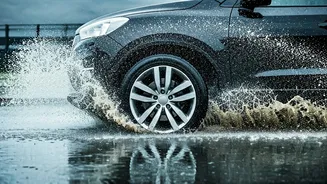
Hydroplaning is one of the most dangerous rainy weather phenomena. It occurs when a layer of water builds up between your tyres and the road surface, leading to a complete loss of steering and braking control. It can happen at speeds as low as 45-50 km/h. To prevent it, ensure your tyres are properly inflated and have adequate tread. Slow down significantly when you see standing water. Try to drive in the tracks of the vehicle ahead of you, as the tyres of that car will have already displaced some of the water. If you do start to hydroplane, do not panic or slam on the brakes. Ease your foot off the accelerator and steer gently in the direction you want to go until your tyres regain traction.
The Hazard Light Misconception
A common but dangerous practice in India is driving with hazard lights on during heavy rain. While the intention is to increase visibility, it creates significant confusion. Hazard lights are designed to signal that a vehicle is stationary and poses a hazard. When you drive with them on, other drivers cannot tell if you are moving or stopped. More importantly, it disables your turn signals, meaning you cannot indicate when you are changing lanes or turning. This makes your next move unpredictable and increases the risk of an accident. The correct procedure in low visibility is to use your low-beam headlights, and if your car has them, fog lamps.
Navigating Waterlogged Roads
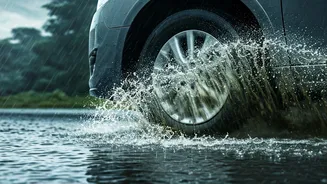
Encountering a flooded street is a common monsoon challenge. The golden rule is: when in doubt, don't drive through it. It's often impossible to judge the depth of the water or know what hazards are hidden beneath the surface, such as open manholes or deep potholes. If you determine the water is shallow enough (generally not higher than the centre of your wheels), proceed by driving slowly and steadily in a low gear to create a 'bow wave'. This helps prevent water from flooding your engine's air intake. After exiting the water, gently tap your brakes a few times to dry them out and ensure they are working correctly.
Be Considerate of Others
Smarter driving is also about being considerate. Pedestrians and two-wheeler riders are far more vulnerable in the rain. Be extra vigilant for people darting onto the road to avoid puddles. Slow down when passing through waterlogged areas to avoid splashing pedestrians and bikers. Remember that two-wheelers are more prone to skidding and falling on slippery surfaces, so give them ample space. Safe driving is a collective responsibility, and a little empathy goes a long way in preventing accidents and making the roads safer for everyone during the monsoon.