






What is a VR/AI Classroom?
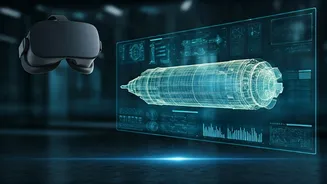
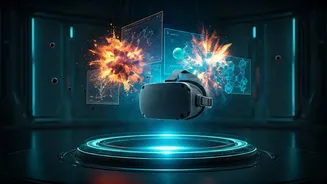
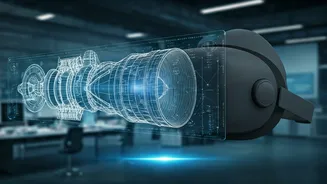
Forget staring at a dusty chalkboard or a static 2D diagram on a screen. A VR classroom integrated with AI plunges students into a three-dimensional, interactive world. In the context of aerospace, it means an engineering student can put on a VR headset
and be instantly transported to a digital twin of a hangar, a mission control room, or even the International Space Station. They can walk around a life-sized jet engine, pick up virtual tools, and perform complex tasks. It's a hands-on experience without the physical constraints, costs, or dangers of a real-world lab. This isn't just a pre-programmed video game; it’s a dynamic, responsive learning environment.
The AI ‘Professor’ in the Machine
Here’s where it gets truly revolutionary. The Virtual Reality component creates the 'where,' but Artificial Intelligence provides the 'who' and 'what.' The AI acts as a personal, all-knowing instructor for each student. As a student attempts to repair a virtual landing gear, the AI can offer real-time guidance, highlighting the correct bolt to loosen or warning if a step is performed out of sequence. More importantly, the AI can introduce dynamic, unpredictable challenges. A sensor might 'fail' unexpectedly, or a sudden 'coolant leak' might appear, forcing the student to diagnose and solve problems on the fly—a crucial skill for any aerospace engineer that is nearly impossible to teach safely in a traditional setting.
Safer, Cheaper, and More Accessible
The practical benefits are immense. A single physical jet engine used for training can cost crores of rupees, and a mistake during a disassembly exercise can lead to catastrophic damage and expense. In a virtual lab, a student can 'break' the engine a hundred times, learning from each mistake with zero financial or physical risk. This democratises access to high-end training. A college in a smaller town, which could never afford a full-scale aerospace lab, can now offer world-class, immersive training with a set of VR headsets and a powerful software subscription. It allows for infinite repetition, a key to mastering complex motor skills required for intricate assembly and repair work.
Building the Future of Indian Aerospace
For a nation with ambitions like India's—from the Gaganyaan mission to becoming a global hub for aircraft MRO (Maintenance, Repair, and Overhaul)—a highly skilled workforce is non-negotiable. Traditional training methods are slow, expensive, and limited in scale. Integrating VR and AI allows for the rapid upskilling of thousands of engineers and technicians to a consistent, high standard. Companies like Boeing and Airbus are already heavily investing in this technology for their own training programmes. For India to compete and lead, adopting these virtual labs isn't just an option; it's a strategic necessity. Premier institutions and private sector players are beginning to explore pilot programmes, recognising that the engineers who will design our next-gen rockets might learn their first lessons in a virtual world.