



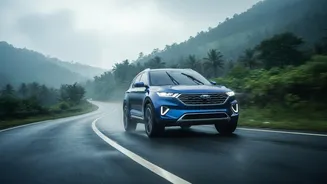
See and Be Seen: Visibility Is Paramount
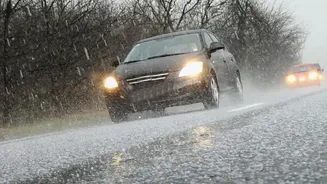
Heavy rain and road spray drastically reduce visibility, making it one of the biggest challenges of monsoon driving. Your first line of defence is your wiper blades. Summer heat can harden the rubber, causing them to streak, skip, or squeal instead of clearing
the glass effectively. If they aren't providing a clean sweep, replace them. It's an inexpensive fix for a priceless safety feature. Also, top up your windshield washer fluid with a proper cleaning solution to cut through oily grime thrown up by other vehicles. Just as important is ensuring others can see you. Walk around your car and test all your lights: headlights (low and high beam), tail-lights, brake lights, and indicators. Clean, bright lights are essential in overcast conditions and heavy downpours.
Grip and Control: Your Tyres Matter Most
Your tyres are the only things connecting your car to the slippery road. In wet conditions, their ability to channel water away and maintain grip is critical to preventing aquaplaning, where a layer of water builds up and causes you to lose control. Before your trip, inspect the tread depth. While the legal minimum in India is 1.6mm, for monsoon safety, experts recommend at least 3mm to ensure effective water dispersal. Also, check the tyre pressure when the tyres are cold, including the spare. Incorrect pressure affects handling, braking, and can lead to uneven wear. A pre-trip wheel alignment and balancing check is also wise, as it ensures the car tracks straight and true, which is especially important on unpredictable wet roads.
Stopping Power: Don't Neglect Your Brakes
Wet roads mean longer stopping distances, so your braking system needs to be in peak condition. Listen for any squealing or grinding noises when you apply the brakes, and pay attention to any vibrations or a spongy feeling in the pedal—all are signs that your brakes need immediate inspection. Water can reduce the initial bite of the brakes, so get your brake pads, discs, and fluid levels checked by a mechanic. Dark or cloudy brake fluid may have absorbed moisture, which can compromise its performance. After driving through a waterlogged patch, it's a good practice to tap the brakes gently for a few seconds to help dry the components and restore their effectiveness.
Protect the Mechanicals and Electricals
The monsoon's humidity and moisture are tough on a car's core components. Your battery works harder during this season due to the increased use of lights, wipers, and the defogger. Check the battery terminals for any corrosion, which can hinder performance, and ensure the connections are tight. A weak battery is more likely to fail in damp weather. It’s also crucial to protect the car from water damage. Avoid driving through deep, standing water if you can't judge its depth, as it can enter the engine or exhaust and cause catastrophic damage. An anti-rust coating on the underbody provides a valuable shield against corrosion from constant exposure to water and mud.
Pack a Monsoon-Specific Emergency Kit
While a standard emergency kit is always a good idea, the monsoon calls for a few specific additions. In case you get stranded, you'll be glad you packed them. Your kit should include a powerful flashlight, a fully charged power bank for your phone, and a complete first-aid kit. For monsoon-specific troubles, add a sturdy tow rope, jumper cables, and a puncture repair kit. An umbrella, a raincoat, and a few dry towels can make a huge difference if you have to step out in a downpour. Finally, pack some non-perishable snacks and drinking water, just in case help is further away than you'd like. Having these essentials on hand provides peace of mind and can turn a potential disaster into a manageable inconvenience.