






The dream of self-driving ships navigating the world's oceans is closer than ever, but testing these complex systems is risky and expensive. Now, researchers from IIT Madras have unveiled a groundbreaking solution to bridge this gap.
Introducing SeaNav: A Virtual Ocean
Researchers at the
Indian Institute of Technology Madras's Department of Ocean Engineering have developed an innovative platform called 'SeaNav'. It is a real-time digital twin designed to simulate the high seas, allowing for the comprehensive testing and validation of autonomous navigation systems for ships. Think of it as an incredibly sophisticated video game for artificial intelligence, where an AI captain can be trained in a high-fidelity virtual environment before ever taking the helm of a real vessel. This tackles a major hurdle for the global shipping industry, which is responsible for transporting over 80% of world trade and is keenly exploring automation for efficiency and safety.
The Challenge of Real-World Testing
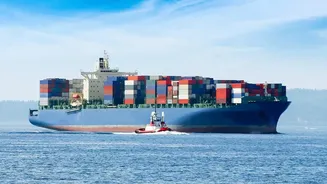
Developing a self-driving system for a car is one thing; developing one for a 300,000-tonne supertanker is another challenge entirely. The stakes on the open ocean are immense. Real-world testing of autonomous navigation algorithms is not only prohibitively expensive and logistically complex but also fraught with potential hazards. A single coding error could lead to catastrophic collisions or environmental disasters. SeaNav was created to directly address this problem by providing a safe, controlled, and cost-effective alternative. It allows developers to push their systems to the limit, simulating dense traffic, treacherous weather, and complex port manoeuvres without any real-world risk.
How the Digital Twin Works
SeaNav creates a 'digital twin' of the maritime world using the Unity3D engine, a powerful tool often used for creating realistic video games. This isn't just a simple map. The platform meticulously replicates ocean waves, vessel dynamics, and complex navigation environments. It fuses data from various simulated sensors like radar and AIS (Automatic Identification System) to create a complete picture for the AI. The system has been calibrated and benchmarked using data from a 320-meter-long tanker, ensuring that the results generated in the virtual world closely mirror what would happen in real-world shipping operations.
Aligning with India's Maritime Vision
This technological leap is not happening in a vacuum. The development of SeaNav aligns perfectly with the Government of India's ambitious 'Sagarmala Programme' and 'Maritime India Vision 2030'. Both initiatives emphasize the need for smart ports, digital technologies, and autonomous systems to boost the efficiency and competitiveness of India's maritime sector. According to Dr. Suresh Rajendran, an Associate Professor at IIT Madras, the platform can significantly strengthen safety at major Indian ports like Chennai, Mumbai, and Kochi by helping develop AI-assisted navigation systems that reduce the risk of collisions and groundings.
Beyond Commercial Shipping
The potential applications for SeaNav extend far beyond just cargo ships. Its multi-vessel simulation capabilities make it a valuable tool for coastal surveillance, search-and rescue operations, and maritime defence. By combining digital twins, AI, sensor fusion, and even virtual reality, the platform creates an environment where both autonomous systems and human operators can be trained safely and efficiently. This could revolutionize how naval crews prepare for complex missions or how coast guard teams coordinate responses to emergencies at sea, making it a versatile asset for national security and public safety.