






The Comfort Conundrum
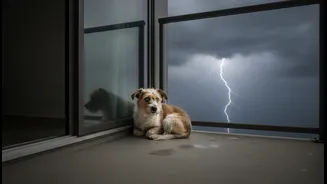
When a pet is trembling, panting, and pacing, our natural reaction is to soothe them with petting and sweet talk. However, some veterinary experts suggest this can sometimes backfire. Instead of interpreting your affection as comfort, your pet might see
it as praise or confirmation that their fearful behaviour is correct. If you act anxious and shower them with unusual attention, it can signal to them that there really is something to be afraid of, inadvertently reinforcing their anxiety. The goal is to project calmness and show them through your own behaviour that everything is normal and safe.
Decoding Storm Anxiety
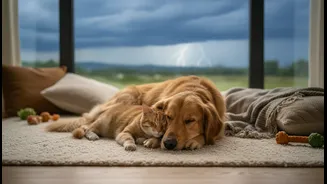
A pet's storm phobia is more complex than just a fear of loud noises. Animals are incredibly sensitive to environmental changes. They can often sense the drop in barometric pressure that precedes a storm long before we can. For some dogs, the build-up of static electricity in the air can be physically uncomfortable, making them feel antsy and on edge. The trifecta of booming thunder, flashing lightning, and even the sound of heavy rain can create an overwhelming sensory experience, triggering a fight-or-flight response. Understanding these multiple triggers helps explain why their distress can start well before the first thunderclap.
Build a Safe Haven
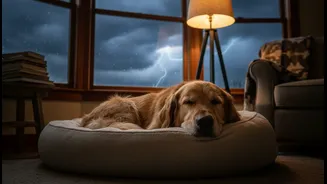
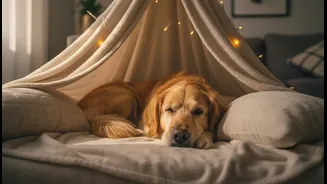
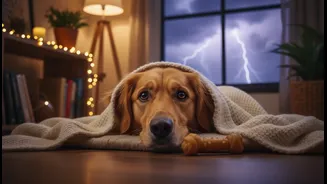
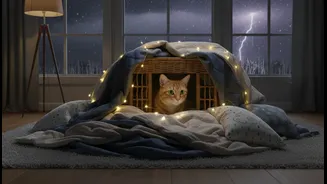
Instead of forcing comfort, empower your pet by giving them a space where they can feel secure on their own terms. The best safe haven is a quiet, enclosed area, preferably without windows, like a closet, a bathroom, or a covered crate (with the door left open). Make this space cosy and inviting with their favourite blankets, bedding, and even an item of your clothing that carries your reassuring scent. Playing soft music or using a white noise machine can help muffle the sounds of the storm outside. The key is to make this space accessible at all times, so they can retreat to it whenever they feel the need.
Proactive Management Tools
The best time to manage storm phobia is before the storm hits. One effective long-term strategy is a combination of desensitization and counter-conditioning. This involves playing recorded storm sounds at a very low volume while engaging your pet in a fun activity, like playing or giving them special treats. Over time, you can gradually increase the volume, helping your pet build a positive association with the sounds they once feared. For immediate relief, many owners find success with anxiety wraps, such as a Thundershirt, which applies gentle, constant pressure that has a calming effect similar to swaddling a baby. Pheromone diffusers that mimic calming animal scents can also help create a more relaxed atmosphere.
When to Involve a Veterinarian
While these strategies can significantly help, some pets have anxiety so severe that it becomes destructive or puts them at risk of injury. If your pet's storm phobia isn't improving or seems to be getting worse, it is crucial to consult your veterinarian. They can rule out any underlying medical issues and discuss a broader range of options. In some cases, a vet might recommend calming supplements containing natural ingredients like L-theanine. For severe phobias, they may prescribe anti-anxiety medications to help your pet cope safely during a storm. These medications should only ever be used under the direct supervision of a qualified veterinary professional.