








Phase 1: Create a Separate Sanctuary
Before your new cat even arrives, designate a separate room for them. This will be their 'base camp'. In a flat, this could be a spare bedroom, office, or even a bathroom. The key is that the door can be securely closed. Equip this room with everything
the new cat needs: a litter box, food and water bowls, a comfortable bed, and a few toys. This initial separation is not punishment; it's a crucial step to allow the newcomer to decompress in a safe, small territory without feeling overwhelmed by a new environment and another cat. It also keeps your resident cat from feeling like their entire world has been invaded overnight. Ensure this sanctuary room is one your resident cat doesn't spend a lot of time in, if possible.
Phase 2: The Art of Scent Swapping
Cats communicate extensively through scent, so this is where their first introduction truly begins. After a day or two, start swapping scents between them. Take a blanket or soft toy your new cat has slept on and give it to your resident cat to investigate. Do the same for the new cat with an item that smells of your first pet. You can also gently rub a cloth on each cat’s cheeks, where their facial pheromones are located, and swap them. This allows them to get used to each other's existence in a non-threatening way. They learn about the other cat's presence on their own terms, gradually associating the new smell with their safe home environment.
Phase 3: Mealtime Negotiations
The next step is to build positive associations. The easiest way to do this is with food. Begin feeding both cats on opposite sides of the closed door of the sanctuary room. They will be able to smell each other while enjoying a meal, creating a link between the other cat's scent and the positive experience of eating. Start with the bowls far from the door, and with each successful, calm meal, move them a little closer. If there is any hissing or signs of stress, move the bowls further apart again. Patience is your best tool here; don't rush this process.
Phase 4: Swapping Spaces
Once both cats are eating calmly near the door, it's time for a full location swap. Place your resident cat in the sanctuary room (with their own food and water), and allow the new cat to explore the main part of the flat for a short, supervised period. This allows the new cat to familiarise themselves with the larger territory and spread their scent, while the resident cat does the same in the smaller space. It helps normalise the presence of both cats throughout the entire flat, making it shared territory rather than one cat's exclusive domain. Repeat this for a few days.
Phase 5: First Visuals and Face-to-Face Meetings
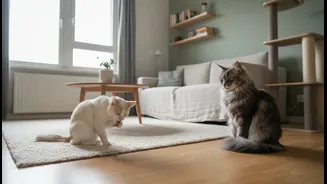
When scent and space swapping is going well, it’s time for the cats to see each other. The first visual contact must be controlled and brief. You can use two stacked baby gates in the doorway of the sanctuary room, or crack the door open just enough for them to see but not touch. Engage them with toys or special treats during these visual meetings to keep the association positive. Keep these sessions short, ending on a good note before either cat becomes stressed. Over several days, gradually increase the duration. When they seem consistently calm, you can allow short, fully supervised meetings in a neutral common area, always ready to distract with a toy or end the session if tension rises.
Phase 6: Allocating Resources in a Shared Space
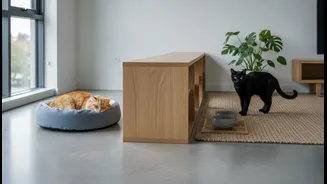
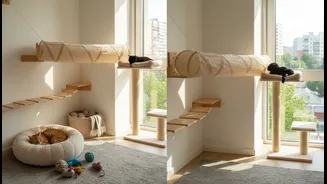
In a smaller flat, preventing resource competition is vital for long-term peace. The golden rule is to have one of everything per cat, plus one extra. This applies especially to litter boxes. For two cats, you should ideally have three litter boxes in different, quiet locations. This prevents one cat from blocking the other's access. Also, provide separate food and water stations; cats often feel vulnerable while eating and drinking. Ensure there are multiple high perches like cat trees or shelves, and cozy hiding spots. Vertical space is crucial in a flat, as it multiplies the available territory and allows cats to create distance when they need it.