



Jamun: The Tart Purple Powerhouse
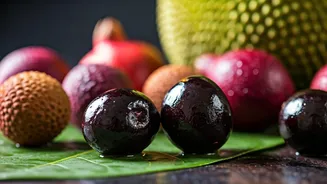
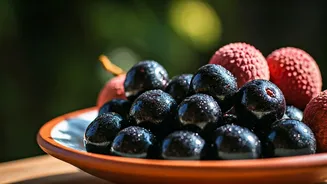
If you see a vendor selling small, dark purple, olive-shaped fruits, you’ve likely found Jamun, also known as Java plum or black plum. A beloved staple of the monsoon season in India, this fruit is a flavor journey in a single bite. The initial taste
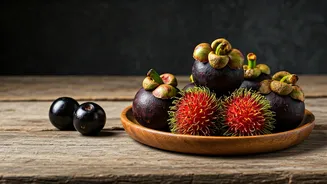
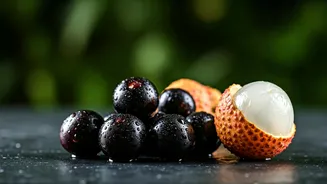
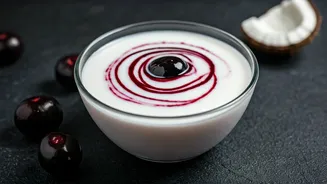
is intensely astringent and puckeringly tart, a sensation that quickly mellows into a deep, earthy sweetness. Think of it as the wild cousin of a Concord grape, with the attitude of a cranberry. The deep purple flesh will stain everything it touches—fingers, tongue, clothes—a vibrant violet, a tell-tale sign of its high anthocyanin content, the same powerful antioxidants found in blueberries. In South Asia, it's often enjoyed fresh with a pinch of 'kala namak' (black salt) to cut the astringency and enhance its sweetness. While finding it fresh in the U.S. can be a treasure hunt, it's widely available frozen or as pulp in Indian grocery stores, perfect for making vibrant smoothies, sorbets, or a tangy summer cooler.
Rambutan: The Spiky, Sweet Spectacle
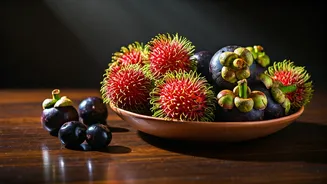
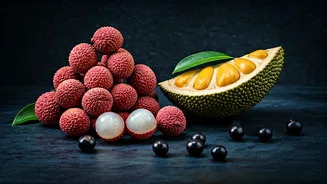
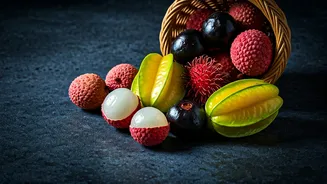
Don't let the wild exterior fool you. Rambutan, with its flamboyant red skin and soft, hair-like spikes (the name comes from the Malay word for 'hair'), is one of nature's most delightful treats. It’s a close relative of the lychee and longan, but many fans argue it's the best of the bunch. Peeling away the pliable rind reveals a single, translucent white orb that’s incredibly juicy, sweet, and fragrant. The flavor is a perfect balance of sweet and mildly acidic, like a super-hydrating grape with hints of strawberry and floral notes. The texture is firmer and slightly creamier than a lychee, making for a satisfying bite. To eat it, simply score the skin with a paring knife or your thumbnail and pull it apart. Pop the fruit in your mouth and eat around the central seed (which is not edible). Once a rare find, rambutans are now increasingly available in Asian markets across the U.S. and even pop up in some mainstream grocery stores during their summer peak season.
Mangosteen: The Queen of Fruits
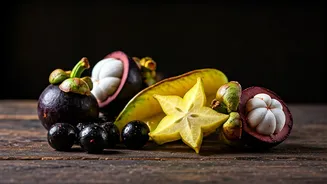
Often hailed as the “Queen of Fruits” for its exquisite flavor, the mangosteen is the definition of a delicacy. It comes in a regal package: a thick, woody, deep purple rind topped with a green calyx that looks like a tiny crown. Getting inside requires a bit of effort—the best method is to score the equator of the fruit with a knife, being careful not to cut into the flesh, and then twist it open. Your reward is a cluster of snowy-white, garlic-clove-shaped segments of pure bliss. The flavor is almost impossible to describe, a sublime symphony of sweet and tangy notes that call to mind peach, strawberry, lychee, and a hint of vanilla-citrus cream. It’s delicate, complex, and utterly refreshing. For years, fresh mangosteens were banned from import into the U.S., but thanks to irradiation treatment, they are now legally available. You'll find them in specialty Asian markets, where they command a high price. But for a taste of what many consider the world's most delicious fruit, it’s an indulgence worth seeking out.