
Mathura’s Milk-Rich Offerings
In the heart of Braj Bhoomi, where Krishna’s story began, the celebrations are steeped in milk and butter. Mathura and Vrindavan honour Krishna with sweets that reflect his childhood love for dairy. The star is Makhan Mishri, a simple yet divine preparation
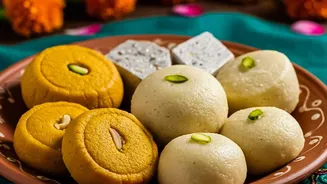
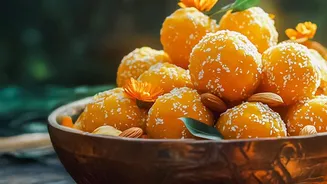
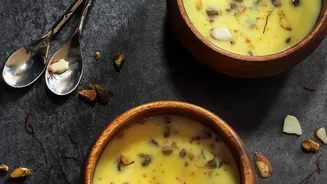
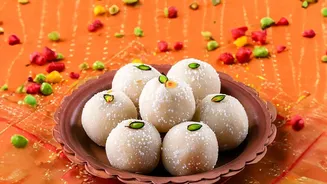
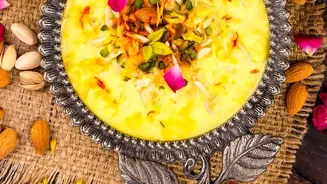
of freshly churned white butter mixed with rock sugar. Another iconic offering is the Mathura Peda, a rich, caramelised sweet made by slowly cooking khoya (milk solids) and sugar. These offerings are not just food; they are a direct culinary nod to Krishna, the 'Makhan Chor' (butter thief), and the pastoral landscape of his youth. Devotees also prepare Rabri, a thickened sweet milk, and various forms of Kheer, reinforcing the region's deep connection to milk-based delicacies as a form of devotion.
Maharashtra’s Savoury 'Kala'
In Maharashtra, Janmashtami, often called Gokulashtami, is synonymous with the energetic tradition of Dahi Handi. The food that embodies this spirit is Gopalkala or Dahikala. The name itself gives it away: 'Gopal' is a name for Krishna, and 'kala' means mixture. This unique prasadam is a savoury blend, quite different from the sweet-dominant offerings elsewhere. It’s made with flattened rice (poha), yoghurt (dahi), cucumber, green chillies, ginger, and sometimes fruits like pomegranate. The dish is believed to mimic the meal Krishna would share with his cowherd friends, mixing whatever they brought together. This tradition connects directly to the Dahi Handi ritual, where the pot broken by the 'govindas' is filled with a similar mixture.
Bengal’s Seasonal Sweet Fritters
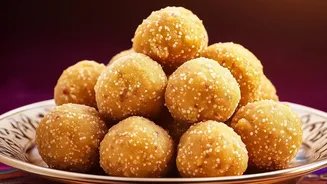
In West Bengal, the festival's flavour is distinctly seasonal, marked by the arrival of the Asian Palmyra Palm, or 'Taal'. A Bengali Janmashtami is considered incomplete without Taler Bora, sweet fritters made from the ripe palm fruit's pulp. The process involves extracting the fragrant, golden pulp and mixing it with rice flour, wheat flour, coconut, and sugar before deep-frying small balls into golden-brown perfection. The preparation is so central to the festival that the day after Janmashtami is sometimes called Tal Nabami (Palm Ninth Day). This tradition showcases how local, seasonal produce is elevated to a sacred offering, creating a unique culinary identity for the festival in the region. Other delicacies like Taal Kheer (palm kheer) are also prepared.
South India’s Crispy Offerings
In Southern states like Tamil Nadu, Krishna Jayanthi is celebrated with the sounds and smells of crispy, fried snacks. The quintessential offerings are Seedai and Murukku. Uppu Seedai (savoury) and Vella Seedai (sweet) are small, crunchy balls made primarily from rice flour. Making them is a meticulous process, as the dough must be just right to achieve the perfect crispy texture. Alongside Seedai, various forms of Murukku (also known as Chakli), a spiral-shaped savoury snack, are prepared. These snacks, along with sweet flattened rice (Vella Aval), are staples offered to Krishna. The tradition of drawing tiny footprints with rice flour paste, leading from the home's entrance to the prayer room, symbolically welcomes the child Krishna, who comes to enjoy these homemade treats.
The Grandeur of 'Chappan Bhog'
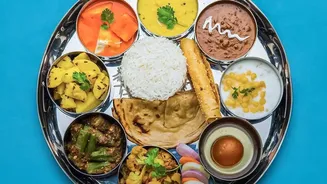
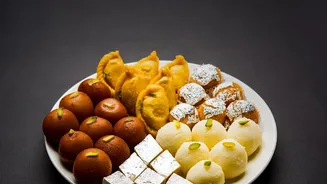
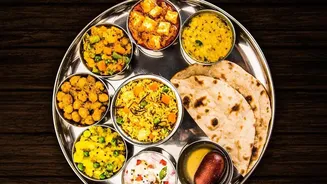
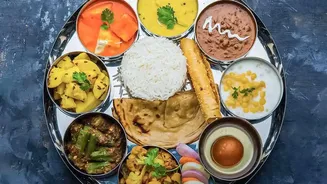
Beyond specific regional dishes lies the grand concept of 'Chappan Bhog', the offering of 56 distinct food items to Krishna. This tradition is rooted in the legend of Krishna lifting the Govardhan Hill for seven days to protect his village from torrential rains, missing his eight daily meals during this time. To show their gratitude, the villagers offered him 56 dishes (7 days x 8 meals). While preparing all 56 items is a monumental task, the spirit of abundance and variety is adopted across India. A Chappan Bhog can include a mix of sweets, savouries, grains, fruits, and drinks, with the exact items varying based on regional and family traditions. It represents the ultimate offering of gratitude, a feast fit for a god who is also a beloved member of the family.