


From Urban Burnout to Cosmic Awe
Young travellers, increasingly exhausted by hyper-connectivity and crowded itineraries, are actively seeking holidays that offer genuine disconnection. This isn't about luxury spas, but about stripping travel back to its most elemental form. Astrotourism,
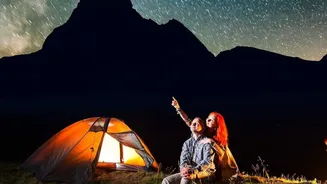
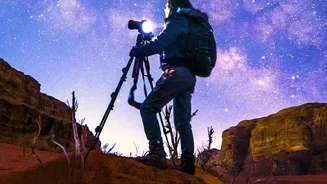
or travelling to destinations with minimal light pollution, provides the perfect antidote to modern burnout. It’s a move away from performative sightseeing towards experiences that feel grounding and authentically offline. The appeal lies in its simplicity: no packed schedules, no crowds, just the silent, overwhelming spectacle of a star-filled sky. This desire for 'slow travel' and mental wellness is a significant driver, as young Indians look for trips that restore and heal rather than simply distract.
India's Celestial Sanctuaries
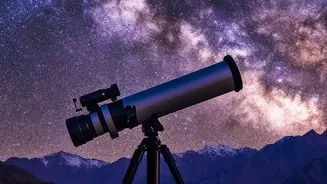
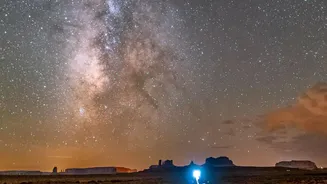
The epicentre of this movement is Hanle in Ladakh, home to India's first official Dark Sky Reserve, established in 2022. Situated at a staggering altitude of 4,500 metres within the Changthang Wildlife Sanctuary, this remote region offers some of the clearest, darkest skies on the planet. Its high altitude, dry air, and near-zero light pollution create 'Bortle-1' sky conditions—the highest possible rating for darkness—where the Milky Way can cast a faint shadow. But the trend extends beyond Hanle. High-altitude deserts and remote national parks across the country are emerging as hotspots. Places like Spiti Valley in Himachal Pradesh, the Rann of Kutch in Gujarat, and even Pench Tiger Reserve in Maharashtra (declared India's first Dark Sky Park) are drawing those in pursuit of the cosmos.
A Journey Inward: The 'Mindful' Element
Stargazing in these reserves is far more than a visual treat; it is a deeply mindful practice. The act of looking up at the vastness of the universe is a powerful tool for mental wellness. Psychologists note that experiencing awe can improve mood, lower stress, and foster a sense of interconnectedness. Gazing at the cosmos provides a profound sense of perspective, often making personal anxieties feel smaller and more manageable in the grand scheme of things. This quiet, meditative activity encourages being present in the moment, a core tenet of mindfulness that has been shown to reduce anxiety and improve mental clarity. For many, it's a cosmic retreat for the mind, a way to disconnect from daily stressors and reconnect with themselves.
Community, Culture, and Conservation
This trend is not just about individual escape; it's also fostering community and empowering local economies. In places like Hanle, a science-driven sustainable development model is taking shape. Local villagers, many of them young women, are being trained as 'Astronomy Ambassadors' and equipped with telescopes to guide tourists. This creates new livelihood opportunities rooted in preserving the very darkness that makes their home unique. Travellers stay in local homestays, sharing butter tea while learning about the Andromeda Galaxy. This form of tourism supports the preservation of a pristine environment, fuels a scientific temperament inspired by India's recent space missions, and helps protect local culture, making the journey meaningful for both visitor and host.