







The Farm-to-Kitchen Connection
The most direct link between rainfall and inflation runs through the heart of India's economy: agriculture. The southwest monsoon, which provides about 70% of the country's annual rainfall, is the lifeblood for the vast agricultural sector. [6] A significant
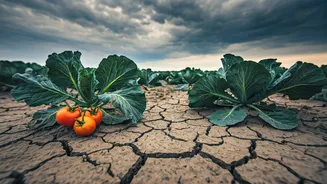
portion of India's farmland is rain-fed, meaning it depends entirely on the monsoon for irrigation, especially for the crucial kharif (summer) crops like rice, pulses, and oilseeds. [12, 14] When the monsoon is timely and well-distributed, it leads to a bountiful harvest. This increases the supply of essential food items, which helps keep prices stable. [12] Conversely, a weak or delayed monsoon can lead to lower crop yields, creating supply shortages and driving up the prices of vegetables, grains, and other staples that form a major part of the average household's budget. [23]
The Ripple Effect on the Wider Economy
The impact of a poor monsoon isn't confined to food prices. It creates a powerful ripple effect across the entire economy. A weak harvest reduces farmers' incomes, which in turn dampens rural demand. [23] This means lower sales for a wide range of goods, from tractors and motorcycles to fast-moving consumer goods (FMCG) like soaps and packaged foods. [11] Furthermore, rainfall affects more than just crops. It replenishes reservoirs and groundwater levels, which are critical for drinking water and for generating hydroelectric power. [10] A shortfall can lead to reduced power generation, potentially affecting industrial output. This complex chain reaction is why a bad monsoon can shave points off the nation's GDP growth. [10]
The RBI's Watchful Eye
For the Reserve Bank of India (RBI), the monsoon is a critical variable in its primary mission to control inflation. The central bank closely monitors food inflation as it heavily influences the headline Consumer Price Index (CPI). A surge in food prices due to a poor monsoon can push overall inflation above the RBI's comfort zone, complicating its monetary policy decisions. [5] If food inflation remains high, it can force the RBI to maintain or even increase interest rates to curb price pressures, which can, in turn, slow down economic growth. In its recent bulletins, the RBI has explicitly flagged a potential below-normal monsoon as a key risk to India's growth and inflation outlook. [5, 9, 17]
The Forecast for 2026
This year, experts are particularly focused on the forecasts. Both the India Meteorological Department (IMD) and private forecasters like Skymet have predicted a below-normal monsoon for 2026, largely influenced by developing El Niño conditions. [2, 3, 4] El Niño, a warming of the equatorial Pacific, is often associated with weaker monsoon rains in India. [22] As of late June 2026, the country has already registered a significant rainfall deficit. [5, 21, 23] While government food grain buffers are reported to be comfortable, a sustained period of weak rainfall could still put upward pressure on the prices of perishable goods and impact the sowing of key crops, threatening to fuel food inflation in the latter half of the year. [7] The RBI has already revised its inflation projection for the fiscal year 2026-27 to 5.1% and lowered its GDP growth forecast to 6.6%, citing the adverse weather as a prominent risk. [5, 13, 17]