



Look up from the urban hustle. Amidst the concrete and chaos, a silent, spectacular drama unfolds each year. Our cities, far from being barren landscapes, are vital pitstops and winter homes for millions of migratory birds and butterflies.
The City's Hidden Rhythm
Twice a year,
ancient travel routes come alive. Driven by the changing seasons, dropping temperatures, and a search for food, countless creatures undertake epic journeys. India sits at the heart of the Central Asian Flyway, a critical migratory path for birds travelling from their breeding grounds in Siberia, Central Asia, and Europe. They arrive seeking the subcontinent's milder winters. The migration season typically begins around September or October, with a return journey starting in March or April. Similarly, butterflies in southern India undertake massive seasonal movements, often travelling between the Eastern and Western Ghats to escape harsh monsoons and find host plants for their next generation. Surprisingly, our urban centres play a huge role. City parks, wetlands, and even leafy residential avenues become crucial rest and refuelling stops for these tired travellers.
Feathered Visitors From Afar
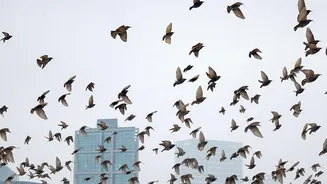
As winter approaches, our city skies welcome a host of new arrivals. One of the most dazzling spectacles is the murmuration of Rosy Starlings. These glossy black and strawberry-pink birds arrive from Eastern Europe and Central Asia, and their massive, synchronised flocks can be seen in cities across India, from Delhi to Thoothukudi. In North India, wetlands in and around cities like Delhi and Varanasi become havens for species like the Bar-headed Goose, which famously flies over the Himalayas, and various ducks and waders escaping the Siberian freeze. Further northeast, Nagaland hosts one of the greatest raptor gatherings on Earth, as hundreds of thousands of Amur Falcons stop to feast on insects before continuing their long journey to Southern Africa. While this is a more remote spectacle, it highlights the sheer scale of migration across India.
A Flutter of Painted Wings
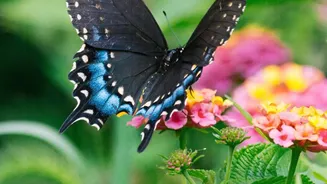
Bird migration is well-known, but the mass movement of butterflies is one of nature’s more subtle secrets. In southern India, the onset of the Northeast Monsoon around October triggers a spectacular migration of millions of butterflies, including the Dark Blue Tiger, Blue Tiger, and Common Crow species. They fly from the eastern plains and Eastern Ghats westward towards the Western Ghats, a journey that can take them directly through cities like Coimbatore, Salem, Madurai, and Bengaluru. Residents in these cities often report seeing thousands of these delicate insects floating past their balconies and through tree-lined streets, pausing on their way to find food and breeding grounds. This incredible sight is a reminder that our urban spaces are part of a much larger, interconnected ecosystem.
How to Become an Urban Naturalist
You don't need to be an expert to witness these events. The first step is simply to pay attention. The best times for spotting birds are often in the early morning and late afternoon when they are most active. Look for activity in local parks, near lakes or wetlands, or even in a single tree with fruit or flowers. Look for the unusual—a bird you haven't seen before or a sudden flurry of activity. For butterflies, a sunny afternoon might reveal swarms passing through. Listen for unfamiliar bird calls. Simple tools can enhance your experience. A pair of binoculars brings distant birds closer. Smartphone apps like eBird or Merlin Bird ID can help you identify species by sight or sound. Citizen science groups on social media, like the Butterfly Migration India WhatsApp group, share real-time sightings, helping you know when to look up.