



Finding Worlds to Investigate
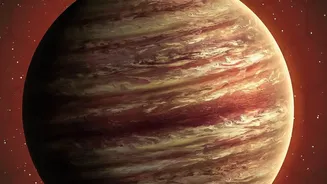
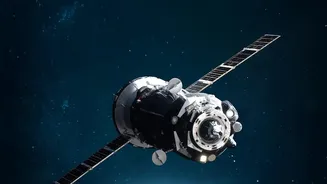
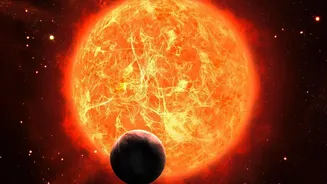
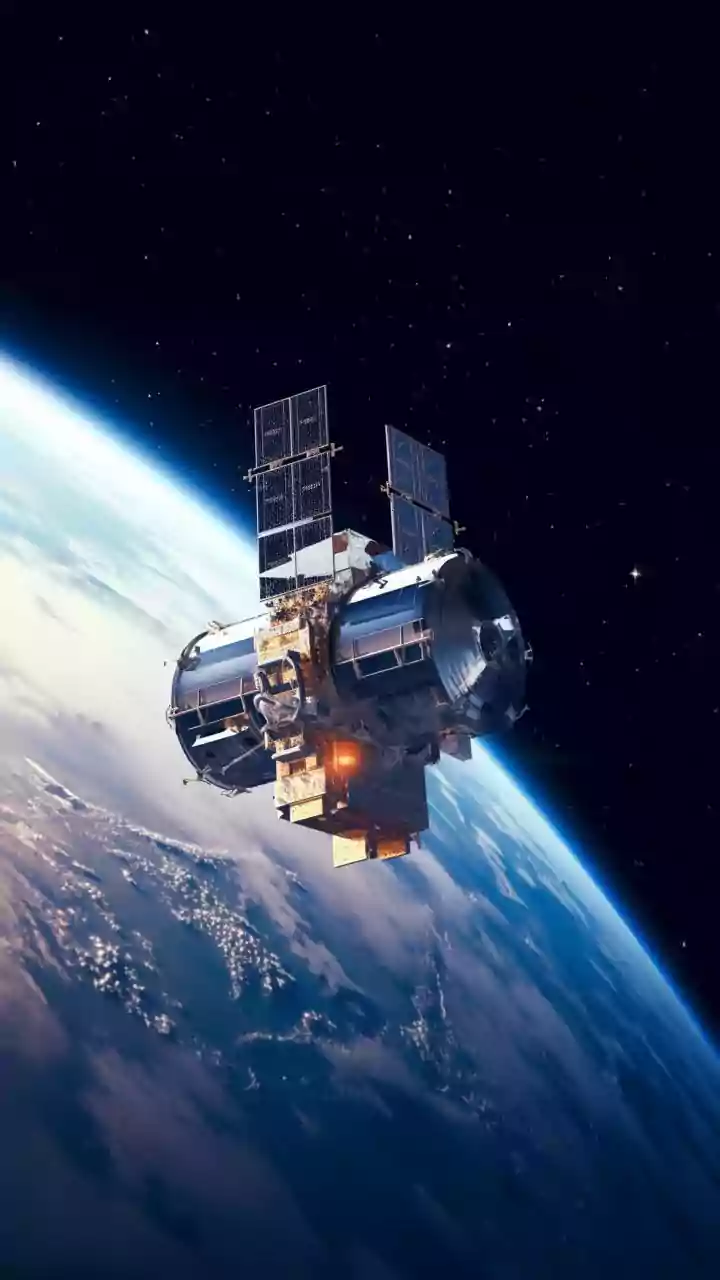
Before you can study a planet's atmosphere, you first have to find the planet. The most common method is called the 'transit method'. Space telescopes like NASA's Transiting Exoplanet Survey Satellite (TESS) stare at stars, watching for a tiny, periodic
dip in their brightness. This dip often means a planet is passing in front of its star from our point of view. This transit is crucial because it sets up the perfect opportunity to analyze that planet's atmosphere. Thousands of exoplanets have been discovered this way, giving scientists a vast catalogue of worlds to investigate for signs of habitability.
The Art of Reading Starlight
The primary technique for studying an exoplanet's atmosphere is called transmission spectroscopy. When a planet transits its star, a tiny fraction of the starlight filters through the very edge of the planet’s atmosphere. Each gas in that atmosphere absorbs light at very specific wavelengths, or colors. Think of it like a barcode; every molecule has a unique pattern. By capturing the starlight before, during, and after the transit, scientists can see which wavelengths of light are missing. Those missing slivers of light reveal exactly which chemicals—like water vapor, methane, or carbon dioxide—are present in the alien air.
A Revolutionary Eye on the Cosmos
This entire field has been revolutionized by NASA's James Webb Space Telescope (JWST). Launched in 2021, its massive mirror and extreme sensitivity to infrared light make it uniquely powerful for this work. Infrared is key because many of the most interesting molecules have strong absorption features in that part of the light spectrum. Webb's spectrographs can spread the starlight into a rainbow of incredible detail, allowing scientists to detect even trace amounts of gases in the atmospheres of distant, and even rocky, Earth-sized planets. This has transformed atmospheric analysis from a theoretical possibility into a practical and powerful observational science.
The Chemical Fingerprints of Life
The ultimate goal is to find 'biosignatures'—any measurable sign that life is or was present. This isn't just about finding one specific gas. On Earth, for example, the simultaneous presence of oxygen and methane is a strong indicator of life. These two gases react and destroy each other, so to find them together suggests something is constantly replenishing them. Oxygen is a byproduct of photosynthesis, while methane is produced by many living organisms. Other potential biosignatures include nitrous oxide and, as was tentatively detected on the exoplanet K2-18 b, dimethyl sulfide—a gas on Earth produced almost entirely by marine phytoplankton.
Proceeding with Caution
The search, however, is fraught with challenges. The signals are incredibly faint, and scientists must be careful to rule out non-biological, or 'abiotic', sources for these gases. For example, oxygen can be produced by water being broken apart by starlight, and methane can be released by geological activity. A discovery must be put into context, considering the planet's size, its star's activity, and the entire chemical makeup of its atmosphere. This is why finding a combination of gases that are in chemical disequilibrium is so compelling. No single gas is definitive proof, but a specific mix can build a powerful case that requires a biological explanation.