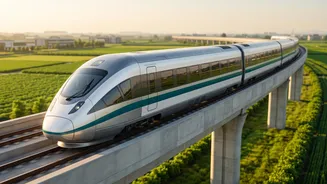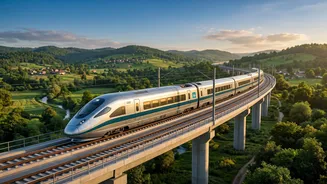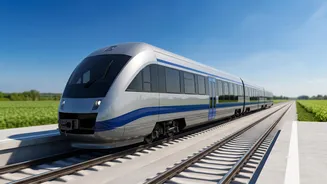




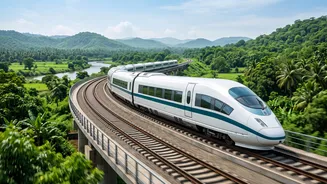
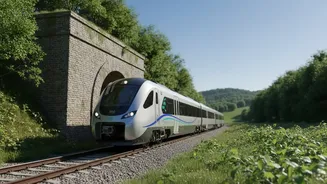
The Engine of Change: What is a Hydrogen Train?
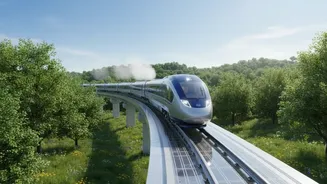
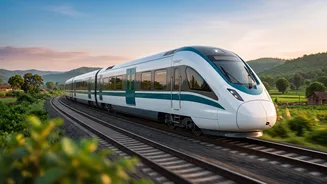
Imagine a train that runs on a fuel that's abundant and produces only water as its exhaust. That's the core promise of a hydrogen fuel cell train. Instead of burning diesel or drawing power from overhead electric lines, these trains create their own electricity
onboard. The process happens inside a fuel cell, where hydrogen stored in tanks reacts with oxygen taken from the air. This electrochemical reaction generates electricity to power the motors, with heat and water vapour being the only byproducts. Excess energy can be stored in batteries to provide a power boost when accelerating or climbing hills, making the system highly efficient.
Hydrogen for Heritage: India’s Pioneer Routes
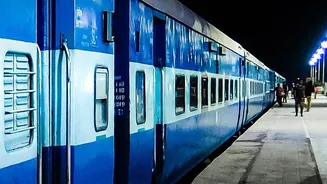
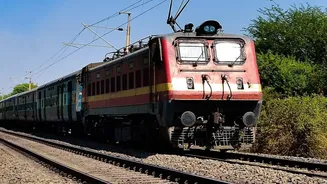
Indian Railways' foray into this technology is strategically named 'Hydrogen for Heritage'. The initiative focuses on deploying an initial fleet of 35 hydrogen trains on ecologically sensitive and scenic heritage routes. The first indigenously developed prototype was inaugurated on July 17, 2026, and now operates on the Jind-Sonipat section in Haryana. This pilot project serves as a real-world test for the technology under Indian operating conditions. The goal is to replace ageing diesel engines on iconic narrow-gauge lines, such as the Kalka-Shimla route, preserving their charm while eliminating harmful emissions and noise pollution. This allows the railways to test the technology on routes where full electrification can be difficult or disruptive.
Beyond Zero Emissions: The Ripple Effects
The adoption of hydrogen trains is a critical component of Indian Railways' ambitious goal to become a 'Net Zero Carbon Emitter' by 2030. While extensive electrification of the broad-gauge network is already nearing completion, hydrogen offers a clean alternative for the remaining non-electrified tracks and heritage lines. This transition significantly cuts down on the emission of greenhouse gases and harmful pollutants like carbon dioxide and particulate matter. Furthermore, it aligns with the national strategy to reduce reliance on imported fossil fuels and foster energy independence by developing a domestic green hydrogen ecosystem. The project also drives the 'Atmanirbhar Bharat' vision, as the trains and supporting infrastructure are being designed and developed in India.
Challenges on the Track
Despite the immense potential, the journey ahead has its challenges. The primary hurdle is cost. Both the fuel cell technology and the production of 'green' hydrogen (made using renewable energy) are currently expensive. Each train is estimated to cost around ₹80 crore, with an additional ₹70 crore needed for ground infrastructure per route. Establishing a widespread and reliable network for hydrogen production, transportation, and refuelling is a massive undertaking. Safety protocols for handling highly combustible hydrogen are also paramount, requiring specialised storage facilities and trained personnel. Initial operational data from the Jind-Sonipat line also shows low passenger numbers, prompting considerations to extend routes to major hubs like Delhi to improve viability.