




An Audience Craving The Real Deal
For years, Computer-Generated Imagery (CGI) was the undisputed king of the blockbuster. It built impossible worlds and fantastical creatures. But audiences have grown savvy. After decades of CGI-heavy films, a sense of visual fatigue has set in, and viewers
can often spot when something feels artificial or weightless. This has sparked a renewed appreciation for practical effects — tangible, on-set creations that interact with real light and physics. The subtle imperfections of a practical stunt, from genuine debris to the strain on an actor's face, create a visceral, grounded experience that digital effects can struggle to replicate. This desire for realism is a major driver behind the recent trend, with viewers connecting more emotionally to scenes and characters that feel physically present in the world.
The 'Top Gun' and 'Mission: Impossible' Effect
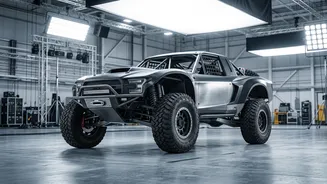
No one embodies the practical effects renaissance more than Tom Cruise. For franchises like Mission: Impossible and the recent smash hit Top Gun: Maverick, the use of real, death-defying stunts has become a primary marketing tool and a mark of quality. When Cruise actually hangs off the side of an Airbus A400M or flies in a fighter jet, audiences know it's real, and that authenticity is exhilarating. Similarly, George Miller's Mad Max: Fury Road became a cultural phenomenon partly because of its commitment to practical mayhem. The film featured over 150 real vehicles, many of which were spectacularly destroyed on camera in the Namibian desert. Director George Miller stated that about 90% of the effects seen in the film were done practically, a fact that thrilled audiences and critics alike.
Grounding Actors, Elevating Performances
The benefits of practical effects extend beyond just visual spectacle; they profoundly impact the actors' performances. Performers consistently deliver more compelling and believable reactions when they have something tangible to interact with. Acting against a green screen, imagining a monster or an explosion, is a far different challenge than reacting to a real stunt unfolding just feet away. In Top Gun: Maverick, the actors underwent a rigorous, three-month training program designed by Tom Cruise to withstand the intense G-forces of flying in an F/A-18. This preparation allowed them to deliver authentic performances under extreme physical duress, capturing the genuine strain and adrenaline of being a fighter pilot—something that simply couldn't be faked.
The Director's Touch
For many acclaimed directors, the choice to use practical effects is a core part of their artistic philosophy. Christopher Nolan, for instance, is famous for his dedication to in-camera realism. From flipping a full-sized semi-truck in The Dark Knight to planting 500 acres of corn for Interstellar, Nolan believes that grounding his films in reality makes them more engaging and rewatchable. He argues that there's an absolute difference between photography and animation; if an effect isn't created from physical elements, it will feel less real to the audience. This approach isn't about rejecting technology, but about using it to serve a vision of tangible, emotionally resonant storytelling.
A Hybrid Future: The Best of Both Worlds
The modern blockbuster isn't about a war between practical effects and CGI, but a smart fusion of the two. The idea that films like Mad Max: Fury Road used no CGI is a misconception; digital artists performed extensive work, such as creating the dramatic, stylized sky and seamlessly combining different takes. Today's most successful approach uses practical effects as the foundation and employs CGI to enhance them—removing safety wires, adding backgrounds, or combining elements for the perfect shot. This hybrid model allows filmmakers to achieve the danger and weight of practical stunts while enjoying the flexibility and safety that digital tools provide. It's a method that respects the audience's desire for authenticity while pushing the boundaries of what's possible on screen.