
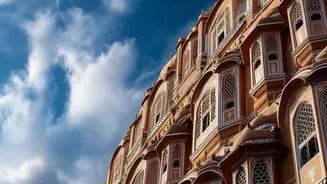
Rajasthan's New Travel Playbook
The government of Rajasthan is actively broadening its tourism strategy, aiming to showcase a more diverse range of experiences beyond its world-famous forts and palaces. In an effort to manage tourist flow and offer more authentic encounters, the state
is promoting emerging destinations like Bundi, Shekhawati, and Banswara. This strategic push encourages travellers to explore deeper, distributing tourism's benefits more evenly and revealing the state's vast cultural tapestry. For visitors, this means a chance to see a side of Rajasthan that is less crowded but equally rich in history and charm, with policies being developed to support infrastructure like homestays.
Bundi: The Allure of an Unspoiled Gem
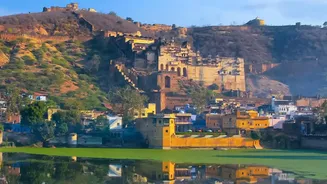
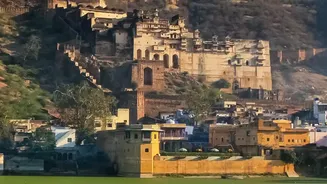
Often called the 'blue city' of eastern Rajasthan, Bundi offers a fairy-tale setting without the overwhelming crowds of its more famous counterparts. Nestled in a gorge of the Aravalli hills, its narrow lanes are lined with blue-hued houses, bustling bazaars, and ornate havelis. This town, which once inspired writers like Rudyard Kipling, retains a palpable old-world atmosphere. Its relative obscurity has preserved a unique, authentic character, allowing visitors to feel as though they have stepped back in time. The city's charm lies in its relaxed pace and the sense of discovering a hidden treasure.
A Fortress of Legends
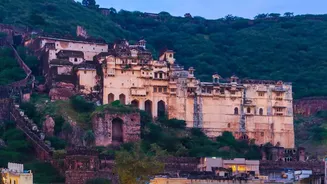
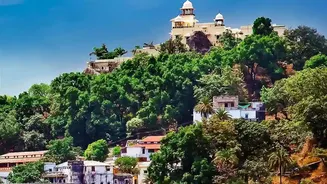
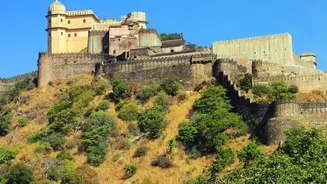
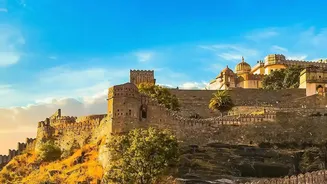
Dominating the skyline is the formidable Taragarh Fort, a 14th-century structure perched on a steep, forested hill. While some parts are now in a charmingly ramshackle state with overgrown vegetation, the fort remains one of the most impressive in Rajasthan. Its massive gateways, secret tunnels, and panoramic views of the city below tell tales of a bygone era of valour. Inside its walls, the Bhim Burj bastion once housed the legendary cannon, Garbh Gunjan, or 'Thunder from the Womb', whose roar was said to be immense. The fort's less manicured state is part of its appeal, offering an adventurous exploration of Rajput history.
Masterpieces in Miniature
Within the larger Garh Palace complex, adjacent to the fort, lies one of Bundi's greatest artistic treasures: the Chitrashala. Also known as the Ummed Mahal, this 18th-century pavilion and gallery features some of the finest examples of the Bundi school of miniature painting. The walls are covered in exquisite murals, still vibrant with colour, depicting scenes from the life of Lord Krishna, royal processions, and local life. These delicate, detailed frescoes offer a stunning visual narrative of the region's artistic and cultural heritage, making the Chitrashala a must-see for any art lover.
The City of Stepwells
Bundi is famously known as the 'City of Stepwells', with over 50 of these ancient water reservoirs dotting the landscape. The most magnificent of these is Raniji ki Baori, or the Queen's Stepwell. Built in 1699 by Queen Nathavati Ji, this 46-meter-deep structure is a masterpiece of subterranean architecture. It features a grand arched gateway and multiple stories connected by symmetrical steps, all adorned with intricate carvings of deities and elephants. These baoris were not just water sources but also important social gathering places, and exploring them offers a unique insight into the life and ingenuity of medieval Bundi.
A Practical Guide to Visiting Bundi
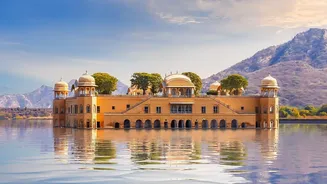
Bundi is located about 215 kilometres from Jaipur and 40 kilometres from the major railway hub of Kota, making it accessible by road and rail. Regular buses and taxis connect Bundi to these larger cities. The best time to visit is during the cooler months, from October to March, when the weather is pleasant for exploring the forts and walking through the town. Accommodation options range from budget-friendly guesthouses to charming heritage havelis that offer an immersive stay. For a comprehensive experience, plan for at least two days to explore the Garh Palace, Taragarh Fort, the famous stepwells, and the serene Nawal Sagar Lake.