








Cloud AI vs. Local AI: What's the Difference?
At its core, the debate between cloud and local AI is about location. For years, powerful AI has lived in the 'cloud'—massive, remote data centers owned by tech giants. When you ask a cloud-based assistant a question, your data travels over the internet,
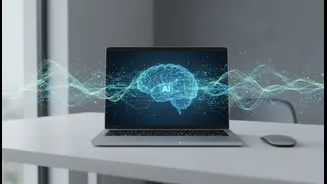
gets processed on a server you don't control, and the answer is sent back. This is how many popular services work. Local AI, also known as on-device AI, flips this model. As the name suggests, it runs directly on your hardware, like your smartphone or laptop. Thanks to more powerful mobile chips and efficient AI models, your device can now handle complex tasks all by itself, without ever needing to send your data to an external server. Think of it as the difference between ordering food delivery (cloud AI) and having a personal chef who cooks right in your kitchen (local AI).
The Privacy Problem with Cloud-Based AI
The convenience of cloud AI comes with a significant privacy trade-off. Every piece of information you share—be it a voice command, a personal photo, or a sensitive work query—is sent to a third party. This exposes your data to several risks. Firstly, remote servers are attractive targets for hackers, and data breaches can expose the private information of millions of users. Secondly, the companies running these services often log your data for their own purposes, which may include training future AI models. Your conversations and patterns can be profiled, creating a detailed map of your life and thoughts. For many, this level of data collection feels intrusive and creates an unacceptable risk, especially when dealing with confidential information related to health, finance, or personal journaling.
How On-Device Processing Creates a Privacy Shield
Local AI models offer a simple yet powerful solution: your data never leaves your device. Because all processing happens right on your phone or computer, there is zero network exposure for your sensitive information. This single change drastically reduces privacy risks. There's no data transmission to intercept, no third-party server to be breached, and no company logging your every interaction to train their next model. You retain complete control. This approach not only enhances privacy but also brings other benefits. Responses are faster because there's no delay from sending data back and forth to the cloud. Plus, on-device AI works perfectly offline, making it reliable even when you don't have an internet connection.
Real-World Examples in Everyday Learning
So, how does this private-by-design AI actually help you learn? The applications are already here and growing. Language learning apps can analyze your pronunciation on your device, giving you real-time feedback without sending your voice clips to a server. AI-powered writing assistants can help you draft emails or summarize articles directly within your word processor, keeping the contents of your sensitive documents confidential. You can create a personal knowledge base by feeding an AI your own notes and files, then ask it questions to find connections and summarize information, all of which stays private. Other tools can offer live transcription during a meeting or provide accessibility features like text-to-speech, all without compromising the privacy of the participants.
The Road Ahead: Trade-Offs and a Hybrid Future
While on-device AI offers major advantages in privacy and speed, it isn't without limitations. The most powerful, cutting-edge AI models still require the immense processing power of cloud data centers. Local models, by necessity, are smaller and may not handle extremely complex reasoning as well as their cloud-based counterparts. However, this capability gap is narrowing quickly as hardware gets more powerful and models become more efficient. For many everyday tasks like summarizing text or answering questions based on your personal documents, local AI is more than capable. The future is likely hybrid, where devices handle most tasks locally for speed and privacy, while seamlessly tapping into the cloud for heavy-duty jobs that truly require it.