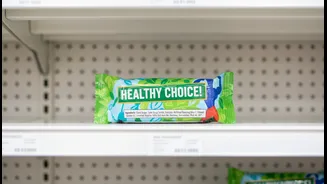









Your Brain on 'Healthy' Labels
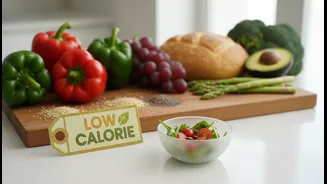
There's a powerful psychological reason you reach for that protein bar. It’s called the “health halo effect.” This cognitive shortcut makes us believe a product is healthier than it really is based on a single positive claim. Marketers are experts at creating
this halo. Words like "organic," "gluten-free," or "low-fat" make our brains overestimate the overall healthfulness of a product, often leading us to ignore the less desirable parts, like high sugar or sodium content. A study found that when a health claim is present, shoppers are less likely to even check the full nutrition facts on the back. This effect is so strong it can even lead people to eat larger portions of a so-called “healthy” snack, mistakenly believing it’s lower in calories.
The Language of Deception
Many of the most alluring words on packaging have vague or unregulated meanings. Take "natural," for instance. While we might picture wholesome, unprocessed ingredients, the term is often loosely applied and can be misleading. Similarly, a “multigrain” bread might sound healthier than plain white bread, but it often just means it contains multiple types of refined grains, not necessarily whole grains. Even a claim like "high protein" requires scrutiny. A chocolate bar with added protein is still a chocolate bar, often with just as much sugar and fat. The Food Safety and Standards Authority of India (FSSAI) has recently started cracking down on brands using terms like "healthy" or "true vitamin" on products without sufficient proof, highlighting how widespread the issue is.
The 'Free-From' Fallacy
Labels that boast about what a product doesn't have—like "fat-free" or "no added sugar"—can be particularly tricky. When fat is removed from a product, it's often replaced with sugar, salt, or other additives to make it taste good. A "fat-free" salad dressing might be loaded with sugar and sodium. The same goes for "no added sugar." A fruit juice might not have extra sugar added, but the label can hide the fact that it's made from fruit concentrate, which is itself a concentrated source of sugar. A claim like "gluten-free" on a packet of chips or cookies creates a health halo, but these products can be just as high in calories, fat, and sugar as their conventional counterparts.
The Shrinking Serving Size Trick
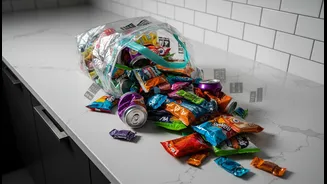
One of the most effective ways packaging misleads is through unrealistic serving sizes. You might glance at a bag of chips and see it has only 150 calories, which seems reasonable. But a closer look might reveal that the serving size is just 10 chips, and the bag you plan on finishing contains four or five servings. This isn't an accident; it's a marketing strategy. By listing the nutrition information for a tiny, unrealistic portion, manufacturers make the calorie, sugar, and fat content appear much lower than what you will actually consume. Studies have shown that the images on cereal boxes often depict portions that are over 60% larger than the recommended serving size, subconsciously encouraging you to over-pour. Always check the serving size and the number of servings per container to understand the true nutritional cost.
How to Become a Smarter Shopper
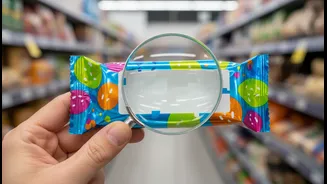
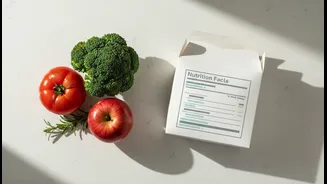
You can easily cut through the marketing noise by adopting a simple, three-step strategy. First, ignore the claims on the front of the package. Think of the front as an advertisement. Second, turn the package over and read the ingredients list. Ingredients are listed in descending order by weight, so the first few ingredients make up the bulk of the product. If sugar or refined flour are near the top, it's not a health food. Third, check the nutrition panel, but look at the 'per 100g' column for a true comparison between products, not the 'per serving' column which can be manipulated. Pay close attention to added sugars, sodium, and saturated fat. The FSSAI is also working on a mandatory Front-of-Pack Labelling (FOPNL) system that will display clear warnings for products high in fat, sugar, and salt, which will further empower consumers.