








An Explosion of Colour
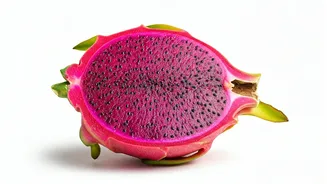
Let's be honest: the primary appeal of dragon fruit is its astonishing appearance. In a fruit basket filled with humble bananas and oranges, the dragon fruit is a superstar. Its brilliant fuchsia skin, adorned with green-tipped scales, looks like something
from another planet. Slicing it open reveals an equally dramatic interior—either a stark white or a deep magenta flesh, both speckled with tiny black seeds. This visual drama is its secret weapon. Adding a few cubes of dragon fruit to a simple dish provides a pop of colour and an exotic flair that no other common fruit can quite match. We eat with our eyes first, and dragon fruit ensures the meal is a feast before you even take a bite.
The Price of 'Exotic'
For years, dragon fruit carried a hefty price tag, cementing its status as a luxury item. Found only in specialty stores, it was an occasional treat rather than a staple. Today, the situation has changed. Thanks to a surge in local cultivation across states like Gujarat, Maharashtra, and Karnataka, the fruit, now also known as Kamalam in some parts of India, is more accessible. While still pricier than a banana, a single fruit can be purchased for between ₹90 and ₹150, depending on the season and location. This new price point is key to its modern appeal: it's affordable enough to be a justifiable indulgence, yet expensive enough to feel like a special treat that elevates your meal from everyday to 'expensive-feeling'.
From Imports to Indian Farms
Dragon fruit, originally from Central America, was once a purely imported delicacy in India, primarily sourced from Vietnam and Thailand. However, Indian farmers have embraced this cactus plant, with cultivation soaring in recent years. The government has actively encouraged its farming under initiatives like 'Aatmanirbhar Bharat' to reduce import dependency. In Gujarat, the fruit was even renamed 'Kamalam'—Sanskrit for lotus—to create a local connection and reflect its appearance. This shift from a foreign exotic to a locally grown superfood has made it a symbol of modern Indian agriculture, even as it retains its high-end, global cachet.
A Taste Milder Than Its Look
For all its visual drama, the taste of dragon fruit is surprisingly subtle. It's often described as a cross between a kiwi and a pear, with a mild sweetness and a crunchy texture from the seeds. The flavour doesn't scream for attention the way its colour does. This mildness is actually one of its greatest strengths in a breakfast context. It can be added to smoothies, yoghurt bowls, or fruit salads without overpowering other ingredients. It provides bulk, texture, and incredible visual appeal while complementing other, stronger flavours, making it the perfect team player in a beautifully constructed breakfast.
The Wellness Factor
Beyond its looks, dragon fruit packs a serious nutritional punch, giving a solid, healthy reason for the indulgence. It is low in calories but rich in fibre, antioxidants like Vitamin C, and essential minerals such as magnesium and iron. This powerful combination can help boost the immune system, improve digestive health, and fight inflammation. In a world where wellness and beauty are increasingly intertwined, the dragon fruit sits at a perfect intersection. It’s not just an empty aesthetic choice; it’s a functional food that nourishes your body while delighting your senses, making the 'expensive' feeling it provides also feel entirely guilt-free.