

The Ultimate Long-Range Forecast
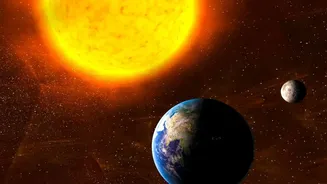
Predicting the weather a week out is hard enough, so how do scientists forecast the movement of planets billions of years from now? The challenge is known as the 'n-body problem'. In a simple system with just two bodies, like the Sun and Earth, the math
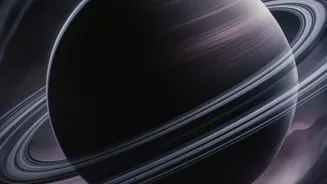
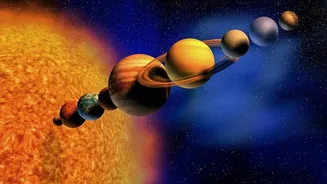
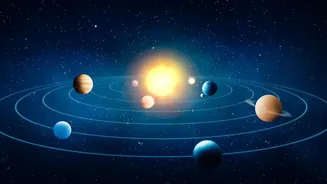
is straightforward. But in our solar system, every planet, moon, and asteroid gravitationally tugs on every other object. This creates a system of immense complexity that was a puzzle even for Isaac Newton. Today, astrophysicists use powerful supercomputers to run thousands of simulations. They input the current positions, velocities, and masses of the planets and let the laws of gravity play out over vast digital timescales, revealing the most likely futures for our cosmic neighbourhood.
A Stable Neighborhood (For Now)
These complex simulations deliver a clear and reassuring verdict: the solar system is stable. For at least the next few billion years, no planets are expected to collide with each other or be ejected into interstellar space. Earth's orbit will remain comfortably predictable. While the planetary orbits are technically chaotic, meaning tiny uncertainties can grow over millions of years, the overall architecture is robust. Studies have confirmed that for timescales relevant to human existence and far beyond, our place in the cosmos is secure. One analysis showed the planets' orbits won't significantly vary for at least the next 100,000 years. So, you can sleep soundly knowing that Jupiter isn't going to suddenly veer off course and disrupt our world.
The Slow Dance of Distant Chaos
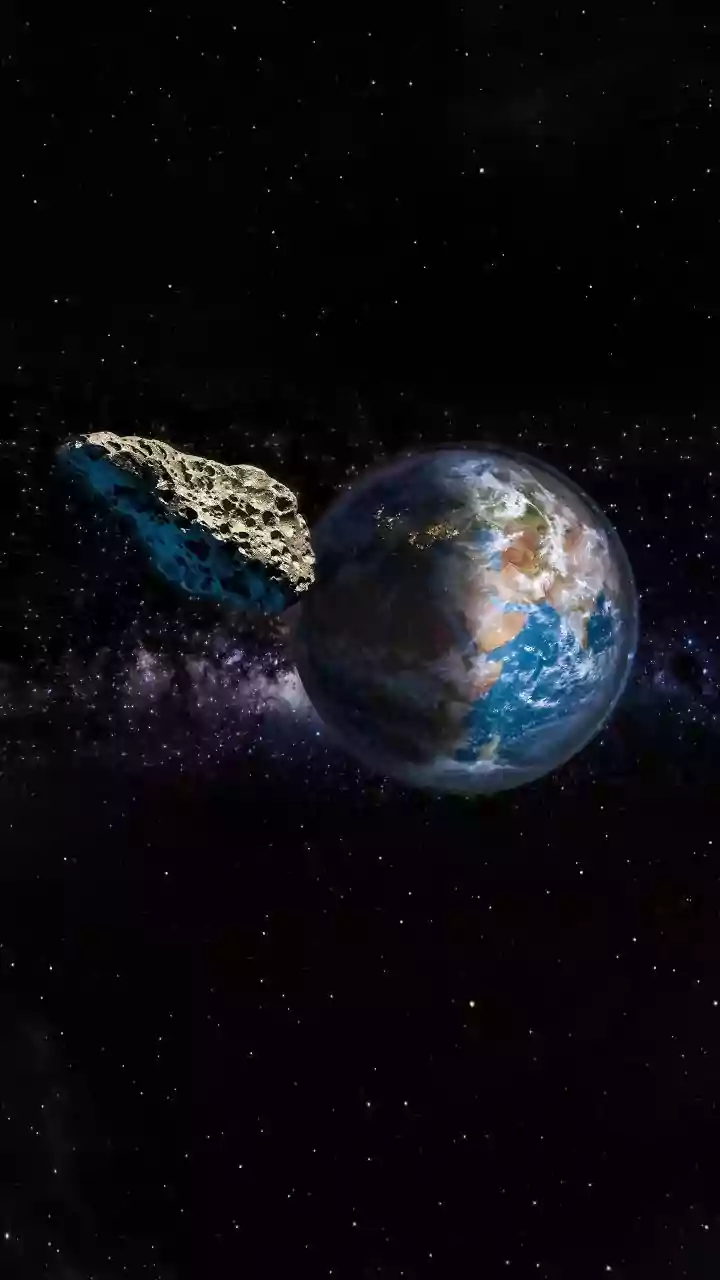
While the immediate future is secure, the very, very distant future holds some interesting possibilities. The main source of potential long-term instability lies with the smallest planet, Mercury. There is a tiny, roughly 1% chance, that over the next five billion years, Mercury's orbit could become highly erratic. This is due to a rare gravitational resonance with Jupiter. Essentially, the timing of Jupiter’s gravitational nudges could one day sync up perfectly with Mercury's elongated orbit, progressively stretching it out. In some of the most extreme and unlikely scenarios simulated, a destabilised Mercury could be flung into the Sun, collide with Venus, or even be sent on a path that crosses Earth's orbit. However, this remains a remote possibility on a timescale longer than the current age of our planet.
The Sun's Final Say
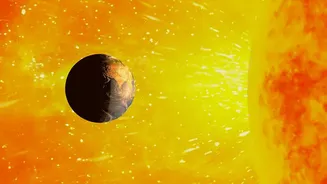
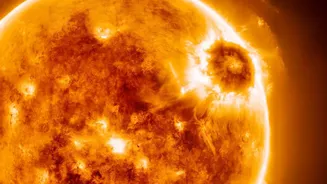
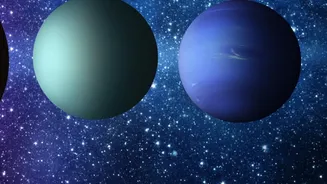
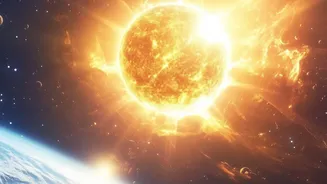
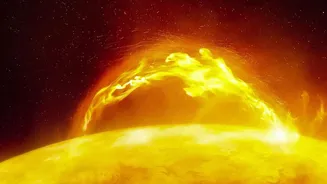
Ultimately, the fate of the solar system is tied to the life of the Sun. In about five to six billion years, our star will exhaust its hydrogen fuel, swell into a red giant, and eventually collapse into a white dwarf. This process will be definitive for the inner planets; Mercury and Venus will be consumed, and possibly Earth as well. For a long time, scientists thought the outer gas giants would survive this transition and orbit the white dwarf for trillions of years. However, recent research suggests the Sun's death throes will be more turbulent than previously believed. Instead of losing mass smoothly, it will eject matter in random, violent 'kicks'. These kicks will nudge the remaining planets, and simulations show this could throw the outer solar system into disarray within a billion years of the Sun becoming a white dwarf, a much shorter lifespan than once thought.