
The Master Blaster's Fiery Debut
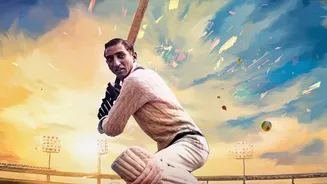
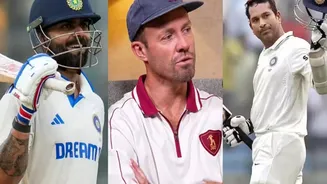
No list of prodigies is complete without Sachin Tendulkar. At just 16 years and 205 days old, he walked out to face Pakistan's ferocious pace attack in Karachi in 1989. While his debut score of 15 was modest, his bravery was not. After being hit on the
nose by a Waqar Younis bouncer, a teenage Tendulkar famously declined medical help and continued to bat, showcasing a grit that would define his 24-year career. Though he isn't the absolute youngest to play Test cricket, his debut is iconic as he became India's youngest Test player, a record he still holds. It was the start of a journey that would see him amass more than 34,000 international runs and 100 centuries.
The 14-Year-Old International
Officially, the record for the youngest male international cricketer belongs to Pakistan's Hasan Raza. He made his Test debut against Zimbabwe in October 1996 at a claimed age of just 14 years and 227 days. The record has been a subject of debate, with questions raised about the accuracy of his birth records, and the Pakistan board later withdrew the claim. However, official sources like the ICC and Guinness World Records still list him as the record holder. Regardless of whether he was 14 or 15, debuting at such an age against international opposition is a staggering feat. Following this debut, the ICC introduced a minimum age limit of 15 for international cricket, making Raza's disputed record potentially unbreakable.
Boom Boom's Explosive Arrival
Shahid Afridi's entry into international cricket was nothing short of explosive. In 1996, in only his second international match and first-ever ODI innings, he smashed a century off just 37 balls against Sri Lanka. At a recorded age of 16 years and 217 days, he became the youngest ODI centurion in history. The innings was a whirlwind of power-hitting, including 11 sixes, and it shattered the previous record for the fastest ODI hundred. This knock instantly earned him the nickname "Boom Boom" and set the tone for a career defined by aggressive, game-changing batting. While Afridi himself later admitted in his autobiography that he was likely 19 and not 16, the official record books still credit him with this incredible achievement as a teenager.
The Youngest Leader of a Nation
Captaining a national cricket team is a role that demands immense maturity and tactical nous, qualities not often associated with youth. However, some players are born leaders. For a long time, the record for the youngest Test captain was held by India's Mansoor Ali Khan Pataudi, who took the helm at 21 years and 77 days in 1962. His record stood for over four decades. More recently, Afghanistan's Rashid Khan set a new benchmark. In 2019, when he led his nation against Bangladesh, he was just 20 years and 350 days old, making him the youngest skipper in the history of Test cricket. This achievement was a testament to his extraordinary talent and the central role he plays for his cricket-loving nation.
A Hat-trick at 19
Taking a hat-trick is a rare and celebrated feat for any bowler. To do it as a teenager against your fiercest rivals is legendary. In 1991, during a tense final against India in Sharjah, Pakistani fast bowler Aaqib Javed did just that. At 19 years and 81 days old, he dismissed Ravi Shastri, Mohammad Azharuddin, and Sachin Tendulkar on consecutive deliveries to claim a historic hat-trick. All three were out LBW, making the feat even more remarkable. This performance made him the youngest bowler to ever take an ODI hat-trick, a record that still stands today. He finished the match with incredible figures of 7/37, cementing his place in cricket folklore.